Redefining Manufacturing with Laser Precision
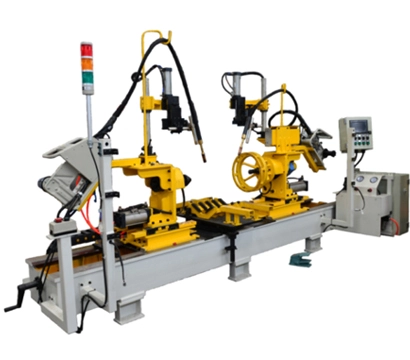
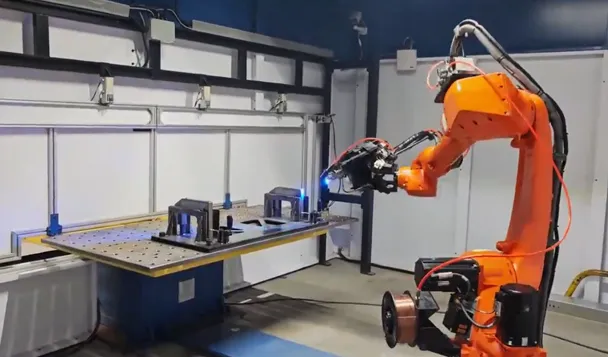
In today's fast-paced industrial landscape, the need for advanced cutting solutions is more critical than ever. A 3D robot laser cutting machine combines robotics and laser technology to provide unmatched accuracy and flexibility in cutting complex shapes and intricate details. Unlike traditional methods, this system uses robotic arms with multiple axes of movement, allowing it to reach angles and curves that were previously difficult to achieve. The result is higher efficiency, reduced waste, and a level of precision that supports industries from automotive and aerospace to construction and heavy equipment manufacturing.

AMINGHUA's Contribution to Advanced Solutions
AMINGHUA, as a national high-tech enterprise, has accumulated over ten years of expertise in welding and automation technology. Building on its strong foundation in automatic welding equipment and welding consumables, the company has expanded into offering cutting-edge robotic solutions such as the 3D robot laser cutting machine. By combining research, design, and manufacturing capabilities, AMINGHUA delivers equipment that meets the demands of modern manufacturing while ensuring performance consistency. Its experience in developing precision systems reflects its dedication to supporting customers worldwide with innovative and reliable solutions.
Comparing Traditional Cutting Methods with 3D Robot Laser Cutting
The advantages of the 3D robot laser cutting machine become more evident when compared to traditional cutting methods. Conventional processes such as plasma cutting or mechanical sawing often fall short in terms of accuracy and adaptability. Laser technology, enhanced with robotics, brings a new dimension to manufacturing by ensuring clean edges, reduced material deformation, and faster production cycles.
Aspect | Traditional Cutting Methods | 3D Robot Laser Cutting Machine |
Cutting Precision | Limited, often requires post-processing | Extremely precise with minimal need for finishing |
Flexibility | Restricted to straight or simple curved cuts | Capable of complex 3D contours and multi-angle cutting |
Material Deformation | Higher due to mechanical force or heat spread | Lower due to concentrated laser energy |
Production Speed | Slower, especially with intricate designs | Faster and more efficient for complex geometries |
Overall Efficiency | Moderate, with higher material waste | High, maximizing output and reducing waste |
This comparison highlights how the 3D robot laser cutting system offers transformative improvements, not just in speed but also in quality and adaptability.

Expanding Industrial Applications
The versatility of the 3D robot laser cutting machine makes it suitable for a wide range of industries. In the automotive sector, it is used to cut body panels, chassis components, and structural reinforcements with high consistency. Aerospace manufacturers rely on this technology for lightweight materials that require precision without compromising strength. In construction and heavy machinery, the machine enables the processing of thick steel and other robust materials while maintaining exact specifications. By integrating robotics, manufacturers gain more control over production, enabling them to meet diverse market needs with greater efficiency.

As industries move toward smart factories and digital manufacturing, the 3D robot laser cutting machine will become an even more critical tool in global production lines. Its ability to combine automation, artificial intelligence, and laser technology makes it ideal for environments focused on efficiency and adaptability. With advancements in software integration and sensor technologies, the next generation of these machines will likely offer even greater precision, real-time monitoring, and predictive maintenance. Companies like AMINGHUA, with their deep knowledge of automation and welding, are well-positioned to lead this technological evolution and provide sustainable solutions to industries worldwide.