Welding electrodes cannot be reduced to one universal list of four types. The term covers several different consumables and non-consumable electrodes, and the correct classification depends on whether you are comparing them by welding process, coating type, AWS classification, base metal or application.
For industrial buyers and welders, understanding the different types of welding electrodes makes it easier to select the correct filler material for strength, welding position, polarity, penetration, hydrogen control and service conditions. This guide explains the major electrode groups and shows where common classifications such as E6010, E6013, E7016 and E7018 fit.
Key Takeaways
| ✓ | Welding electrodes can be classified by process, coating, AWS code, base metal and application. |
| ✓ | The two broad groups are consumable and non-consumable electrodes. |
| ✓ | Common SMAW coating groups include rutile, cellulosic and basic low-hydrogen electrodes. |
| ✓ | E6010, E6011, E6013, E7016 and E7018 have different arc characteristics, current requirements and typical applications. |
| ✓ | Electrode selection should always consider the base metal, required strength, welding position, polarity, service environment and approved welding procedure. |
How Are Welding Electrodes Classified?
You may see references to two types, four types or many more types of welding electrodes. These answers are not necessarily contradictory because they use different classification methods.
| Classification Method | Main Groups | Examples |
|---|
| By Consumption | Consumable / Non-consumable | Stick electrode, welding wire, tungsten |
| By Welding Process | SMAW, GMAW, FCAW, GTAW | Stick rod, solid wire, cored wire, tungsten |
| By Coating | Rutile, cellulosic, basic / low hydrogen | E6013, E6010, E7018 |
| By Base Metal | Carbon steel, low-alloy, stainless, cast iron, nickel alloy | E7018, E8018-C3, Z308, nickel electrodes |
| By Application | Structural, pipeline, repair, hardfacing, low-temperature | E7016, E7018, D212, D707 |
If you first need a definition of what an electrode does in arc welding, see our beginner's guide to welding electrodes.
This page focuses specifically on how the different electrode types are classified and selected.
Two Main Categories of Welding Electrodes
At the broadest level, welding electrodes can be divided into consumable electrodes and non-consumable electrodes.
| Consumable Electrodes | The electrode melts and becomes part of the weld deposit. Examples include coated SMAW stick electrodes, GMAW/MIG solid wire and FCAW flux-cored wire. |
| Non-Consumable Electrodes | The electrode primarily carries current and is not intended to become the filler metal. Tungsten electrodes used in GTAW/TIG are the best-known example. |
4 Common Types of Welding Electrodes by Welding Process
If someone asks for the four main types of welding electrodes, one useful way to answer is by the arc-welding process in which the electrode is used.
| Type | Electrode Form | Consumable? | Typical Use |
|---|
| SMAW / Stick | Flux-coated rod | Yes | Structural welding, repair, pipeline and field fabrication |
| GMAW / MIG | Continuous solid wire | Yes | Production welding and automated fabrication |
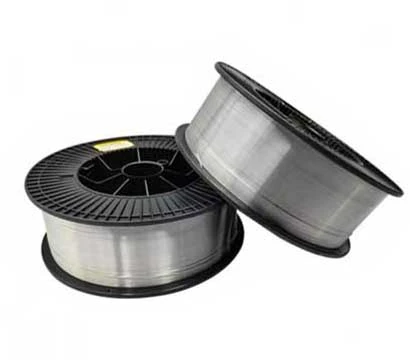
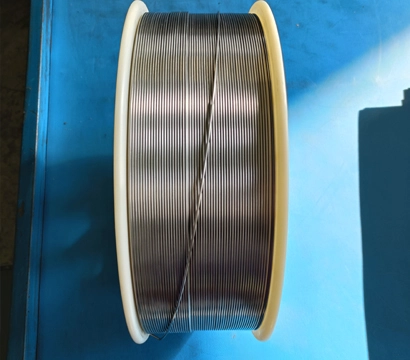
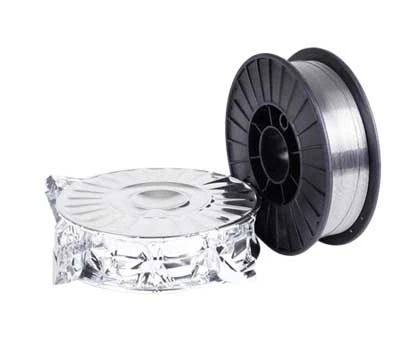
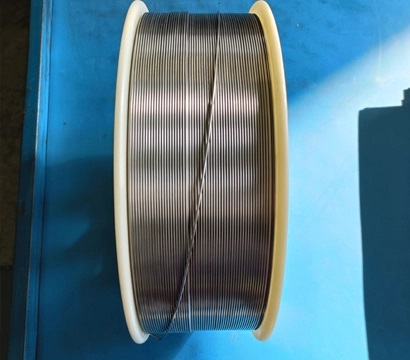
| FCAW | Flux-cored tubular wire | Yes | Heavy fabrication and high-deposition welding |
| GTAW / TIG | Tungsten electrode | No | Precision welding and high-control applications |
Types of SMAW Electrodes by Coating
For stick welding, coating type has a major influence on arc behavior, penetration, slag characteristics, current compatibility and hydrogen control. Three of the most common groups are rutile, cellulosic and basic low-hydrogen electrodes.
1. Rutile-Coated Electrodes
Rutile electrodes are known for relatively easy arc starting, smooth operating characteristics, attractive bead appearance and manageable slag removal. A widely used example isE6013 welding electrode.
It is commonly selected for general fabrication, repair work, light structural steel and applications where ease of operation is important.
2. Cellulosic Electrodes
Cellulosic electrodes such as E6010 and E6011 produce a forceful arc and relatively deep penetration. They are widely associated with root-pass work, pipeline welding and field repair. E6010 is typically used with direct-current electrode positive, while E6011 is commonly chosen when AC capability is required.
3. Basic / Low-Hydrogen Electrodes
Low-hydrogen electrodes are widely used where weld integrity, toughness and hydrogen-cracking control are important. Typical classifications includeE7016 welding electrodeandE7018 welding rod.
Both are widely associated with structural and critical fabrication, but they differ in coating formulation and operating characteristics. For a detailed comparison, seeE7016 vs E7018 welding electrode.
Storage Note:Low-hydrogen electrodes require appropriate storage and handling to limit moisture pickup. Always follow the electrode manufacturer's instructions and the applicable welding procedure rather than applying one storage temperature to every electrode classification.
Types of Welding Electrodes by Base Metal and Application
A second practical way to classify welding electrodes is by the material being joined or the service requirement of the finished component.
Mild Steel and Structural Steel Electrodes
Common choices include E6013 for general fabrication and E7016 or E7018 for structural applications requiring low-hydrogen consumables. Minghua's broader mild steel and alloy steel welding stick range covers multiple structural requirements.
Low-Temperature and Low-Alloy Steel Electrodes
Low-temperature service may require alloyed low-hydrogen electrodes with specified impact toughness and strength. Examples include E8018-C3 welding rod and E9018-G welding rod.
Selection should follow the base-metal grade, required mechanical properties and approved WPS.
Cast Iron Welding Electrodes
Cast iron repair requires electrodes selected for the casting type, machinability requirement and crack sensitivity. For example, Z308 nickel welding rodis used for gray cast iron repair where machinability and crack resistance are important. Other options include Z208 and Z408 depending on repair requirements.
Hardfacing Electrodes
Hardfacing electrodes are designed to rebuild worn surfaces or create wear-resistant deposits rather than simply join two components. Minghua's hardfacing welding rod range includes products for different abrasion, impact and service conditions, such as D212 hardfacing electrode and D707 tungsten carbide welding rod.
Stainless Steel and Nickel-Alloy Electrodes
Stainless steel and nickel-alloy electrodes are selected according to alloy chemistry, corrosion resistance, service temperature and whether similar or dissimilar metals are being joined. They should therefore be classified separately from rutile, cellulosic or low-hydrogen coating groups rather than being treated as a fourth coating type.
AWS Welding Electrode Classification Explained
AWS electrode numbers provide important information about the electrode's mechanical properties and usability. For example, in the classification E7018:
| E | Indicates an electrode. |
| 70 | Indicates a minimum tensile-strength class of approximately 70 ksi. |
| 1 | Indicates suitability for all welding positions under the classification requirements. |
| 8 | Relates to coating and current usability characteristics; E7018 is associated with a low-hydrogen iron-powder coating type. |
| Classification | General Type | Common Current | Typical Characteristic |
|---|
| E6010 | Cellulosic | DCEP | Deep penetration, root-pass work |
| E6011 | Cellulosic | AC / DCEP | Penetrating arc with AC capability |
| E6013 | Rutile | AC / DC* | Smooth arc, general fabrication |
| E7016 | Low hydrogen | AC / DCEP* | Structural and low-hydrogen welding |
| E7018 | Low hydrogen / iron powder | AC / DCEP* | Structural welding and higher deposition efficiency |
*Exact polarity and current requirements should always be checked against the specific manufacturer's datasheet and qualified welding procedure.
How to Choose the Right Welding Electrode
Choosing a welding electrode only by rod number or price can lead to poor weldability or unsuitable mechanical properties. Procurement teams and welding engineers should evaluate several factors together.
| Selection Factor | What to Check | Example |
|---|
| Base Metal | Carbon steel, alloy steel, cast iron, stainless, nickel alloy | E7018 vs Z308 |
| Required Strength | Match the engineering and code requirement | E60XX / E70XX / E80XX |
| Welding Position | Flat, horizontal, vertical or overhead | Check AWS usability designation |
| Power Source | AC, DCEP or DCEN capability | E6010 vs E6011 |
| Penetration | Root pass, thin plate, fill or cap requirement | Cellulosic vs rutile |
| Hydrogen Control | Crack sensitivity and structural requirements | E7016 / E7018 |
| Service Temperature | Normal or low-temperature service | E8018-C3 / E9018-G |
| Wear Conditions | Abrasion, impact, metal-to-metal wear | D212 / D707 |
Engineering Note:For pressure vessels, pipelines, bridges, offshore structures and other critical components, final electrode selection should follow the applicable code, base-metal specification and approved WPS/PQR rather than a general selection chart alone.
Common Welding Electrodes Available from Minghua
Minghua supplies welding electrodes for general fabrication, structural welding, low-temperature service, cast iron repair and hardfacing applications. The table below provides a simple starting point for product selection.
| Electrode | Main Positioning | Typical Selection Scenario |
|---|
| E6013 | Rutile general-purpose electrode | General fabrication and repair |
| E7016 | Low-hydrogen structural electrode | Structural and critical steel welding |
| E7018 | Low-hydrogen iron-powder electrode | Heavy structural fabrication |
| E8018-C3 | Low-temperature low-alloy electrode | Specified low-temperature applications |
| Z308 | Nickel cast iron electrode | Gray cast iron repair and machinable deposits |
| D212 | CrMo hardfacing electrode | Repair and rebuilding of worn steel parts |
| D707 | Tungsten carbide surfacing electrode | Severe abrasive-wear applications |
For additional classifications, visit the complete welding electrode and welding rod range.
Frequently Asked Questions About Welding Electrode Types
1. How many types of welding electrodes are there?
There is no single fixed number because electrodes can be classified in different ways. At the broadest level there are two categories: consumable and non-consumable electrodes. By welding process, four common groups are SMAW stick electrodes, GMAW wire electrodes, FCAW cored electrodes and GTAW tungsten electrodes.
2. What are the four main types of welding electrodes?
When classified by common arc-welding process, the four groups are SMAW coated stick electrodes, GMAW/MIG solid wire electrodes, FCAW flux-cored wire electrodes and GTAW/TIG tungsten electrodes. Other classification systems divide electrodes by coating or base-metal application.
3. What are the two main categories of welding electrodes?
The two broad categories are consumable and non-consumable electrodes. Consumable electrodes melt into the weld, while non-consumable electrodes such as TIG tungsten primarily conduct the welding current.
4. What is the difference between E6013 and E7018?
E6013 is generally considered an easy-operating rutile electrode for general fabrication and repair, while E7018 is a higher-strength low-hydrogen iron-powder electrode widely used for structural welding. The correct choice depends on the required strength, hydrogen-control requirement, power source and welding procedure.
5. What is the difference between E7016 and E7018?
Both are low-hydrogen electrodes in the 70 ksi strength class, but their coating formulations and operating characteristics differ. E7018 contains iron powder and is widely selected where deposition efficiency and smooth operating characteristics are valuable. Final selection should be based on the specific product datasheet and welding procedure.
6. Which welding electrode is commonly used for mild steel?
E6013 is widely used for general mild-steel fabrication, while E7016 and E7018 may be selected when higher strength or low-hydrogen performance is required. Base-metal strength, thickness, joint design and project code requirements should be checked before selection.
7. How do I read AWS welding electrode numbers?
For a classification such as E7018, “E” identifies an electrode, “70” represents the tensile-strength class, “1” relates to welding-position capability, and the final digit relates to coating and current usability. Always check the applicable AWS specification and the manufacturer's technical data for complete classification requirements.
Choose the Right Welding Electrode for Your Application
There is no single welding electrode that is best for every job. The right choice depends on base metal, required strength, welding position, power source, hydrogen-control requirements, service temperature and wear conditions.
If you are sourcing welding electrodes for structural fabrication, low-temperature steel, cast iron repair or hardfacing, explore Minghua's welding electrode range or contact Minghua with your base-metal grade, AWS classification, electrode diameter, quantity and application requirements.