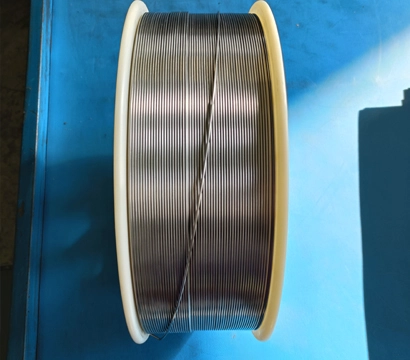
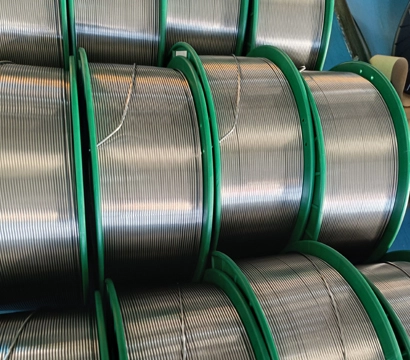
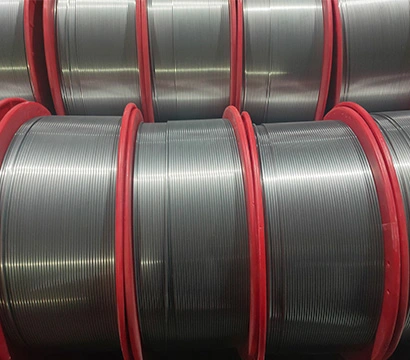
Gas-Shielded vs Self-Shielded Flux Cored Wire
| Selection Factor | Gas-Shielded Flux Cored Wire | Self-Shielded Flux Cored Wire |
| External shielding gas | Required | Not required |
| Typical gas | CO₂ or Ar/CO₂ mixture, depending on classification | None |
| Typical work environment | Indoor workshops or controlled sites | Outdoor and field welding |
| Wind sensitivity | Shielding gas can be disturbed by wind | More suitable for windy field conditions, within product limitations |
| Equipment requirement | Wire feeder, FCAW-capable power source and gas system | Wire feeder and compatible power source; no gas cylinder |
| Polarity | Commonly DCEP for many gas-shielded products, but follow the TDS | Often DCEN for some classifications, but not universal |
| Weld appearance | Often smoother bead profile and lower spatter with the correct settings | May produce more fume and spatter depending on classification |
| Productivity | High deposition for fabrication and positional welding | Continuous field welding without gas handling |
| Common applications | Structural fabrication, shipbuilding, pressure equipment, stainless and alloy welding | Construction, repair, bridges, field fabrication and outdoor work |
| Selection warning | Gas type and classification must match | Confirm single-/multi-pass suitability, polarity and thickness limits |
Gas-shielded and self-shielded are broad FCAW categories, but wires within the same category can still have different pass limitations and operating characteristics. For example, the E71T-GS vs E71T-11 selection guide explains why buyers should confirm single-pass or multi-pass suitability instead of selecting a wire only because it is described as gasless.
Find FCAW Wire by Base Material
| Base Material or Requirement | Relevant FCAW Category | Main Selection Factors |
| Carbon Steel | Carbon Steel Flux Cored Wire | Tensile strength, position, gas, impact toughness |
| High-Strength Low-Alloy Steel | Alloy Steel Flux Cored Wire | Base-metal strength, hydrogen level, impact requirement |
| Stainless Steel | Stainless Steel Flux Cored Wire | Stainless grade, corrosion environment, ferrite and service temperature |
| Nickel Alloys | Nickel Alloy Flux Cored Wire | Alloy chemistry, corrosion medium and high-temperature service |
| Heat-Resistant Steel | Creep-Resistant Steel Flux Cored Wire | Cr-Mo composition, operating temperature and PWHT |
| Wear-Resistant Overlay | Hardfacing Flux Cored Wire | Abrasion, impact, HRC, layer count and machinability |
| Outdoor Carbon Steel Welding | Self-Shielded Flux Cored Wire | Wind, polarity, pass limitation and position |
Understanding Flux Cored Wire Classifications
AWS flux-cored wire classifications communicate information such as tensile strength, welding position, shielding method, usability characteristics, shielding gas and optional hydrogen or impact designators. The exact meaning depends on the applicable AWS specification, including AWS A5.20, AWS A5.22, AWS A5.29 or other alloy-specific standards.
| Classification Element | What It May Indicate |
| E | Electrode |
| 7, 8, 9, 10 or 11 series | Tensile-strength class, depending on specification |
| 0 or 1 | Welding-position capability in applicable classifications |
| T | Tubular or flux-cored electrode |
| Usability designator | Shielding method, polarity and operating characteristics |
| C | Classification tested with CO₂ shielding gas |
| M | Classification tested with mixed shielding gas |
| H4/H8/H16 | Diffusible hydrogen designator, where applicable |
| J or impact designator | Additional impact-toughness requirements in applicable standards |
Always verify the complete classification against the relevant AWS standard and the product TDS; a similar-looking code may have a different meaning under another specification.
How to Select Flux Cored Welding Wire
| Selection Factor | Information to Confirm |
| Base Metal | Carbon steel, low-alloy steel, stainless steel, nickel alloy or overlay substrate |
| AWS Classification | Required classification and applicable AWS specification |
| Shielding Method | Gas-shielded or self-shielded |
| Shielding Gas | CO₂, Ar/CO₂ mixture or none |
| Welding Position | Flat, horizontal, vertical or overhead |
| Polarity | Follow the exact product TDS |
| Wire Diameter | Match equipment, material thickness and deposition requirement |
| Mechanical Properties | Tensile strength, yield strength, elongation and impact toughness |
| Service Condition | Low temperature, high temperature, corrosion or wear |
| Hydrogen Requirement | Required diffusible hydrogen classification |
| Heat Treatment | As-welded or post-weld heat-treated condition |
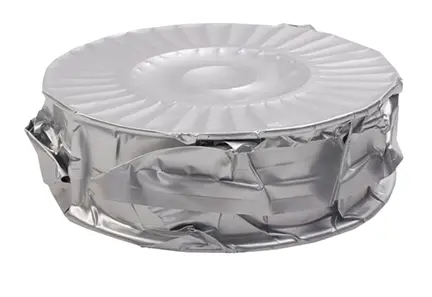
| Packaging | Spool, coil or drum according to actual product availability |
| Documentation | TDS, COA, batch report and required certification |
For hardfacing applications, do not select a wire only by deposited-metal hardness. The base metal, dominant wear mechanism, impact level, operating temperature, number of overlay layers and machining requirements should also be evaluated. Review the hardfacing wire selection guide for a more detailed comparison of HRC ranges and wear conditions.
Flux Cored Welding Wire FAQ
What types of flux cored welding wire does Minghua supply?
Minghua supplies flux-cored welding wires for carbon steel, low-alloy steel, stainless steel, nickel alloys, creep-resistant steel and hardfacing applications. The available range includes gas-shielded FCAW wires and selected self-shielded wires for fabrication, repair, wear-resistant overlay and corrosion-resistant welding.
Available classifications and product specifications should be confirmed according to Minghua’s current product catalog and Technical Data Sheets.
What is the difference between gas-shielded and self-shielded flux cored wire?
Gas-shielded flux-cored wire requires an external shielding gas, such as CO₂ or an argon and CO₂ mixture, depending on the wire classification. It is commonly used in workshops and controlled fabrication environments.
Self-shielded flux-cored wire generates shielding during welding and does not require an external gas cylinder. It is often selected for outdoor construction, field repair and applications where transporting or protecting shielding gas is difficult.
Neither type is universally better. Selection depends on the work environment, required mechanical properties, welding position, polarity and approved WPS.
Does all flux cored welding wire use DCEN polarity?
No. The required polarity depends on the exact wire classification.
Many gas-shielded flux-cored wires use DCEP, while some self-shielded wires use DCEN. However, these are not universal rules. Always follow the polarity stated in the product TDS and approved welding procedure.
Using the wrong polarity may cause unstable arc performance, excessive spatter, poor bead shape, incomplete fusion or reduced mechanical properties.
Can a MIG welding machine use flux cored wire?
A MIG/MAG welding machine may be able to use flux-cored wire when it supports the required FCAW settings, polarity and wire-feeding system.
Before changing from solid wire to flux-cored wire, confirm:
The required polarity
Whether shielding gas is required
Compatible wire diameter
Drive-roll type and pressure
Contact-tip size
Voltage and wire-feed-speed range
Welding-machine output capacity
Gas-shielded FCAW wire also requires a suitable gas supply system. Equipment compatibility should be confirmed with both the machine supplier and the wire TDS.
Which flux cored wire is suitable for outdoor welding?
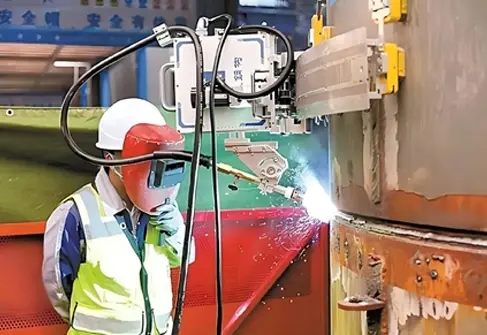
Self-shielded flux-cored wire is commonly considered for outdoor and field welding because it does not rely on an external shielding-gas envelope.
However, the correct classification must still be selected according to:
Base-metal grade
Required tensile strength
Welding position
Single-pass or multi-pass requirements
Material thickness
Impact toughness
Polarity
Project specification
Self-shielded wire should not be selected only because the welding work is outdoors.
How do I choose the correct FCAW wire classification?
Start with the base-metal grade and required welding standard. Then confirm the welding position, shielding method, polarity, strength level, impact toughness, service temperature and heat-treatment condition.
For a more accurate recommendation, provide:
Base-metal specification
Required AWS, EN or ISO classification
Gas-shielded or self-shielded process
Shielding gas
Welding position
Wire diameter
Required mechanical properties
Service temperature
Post-weld heat-treatment requirements
Final selection should comply with the approved WPS and applicable project specification.
How do I read a flux cored wire classification?
An AWS flux-cored wire classification may indicate the electrode type, tensile-strength level, welding-position capability, tubular-wire designation, usability characteristics, shielding gas and optional impact or hydrogen requirements.
The meaning of each character depends on the applicable AWS specification, such as AWS A5.20, AWS A5.22 or AWS A5.29.
For example, the letters C and M may indicate that a classification was tested using CO₂ or mixed shielding gas under the relevant standard. Hydrogen designators such as H4, H8 or H16 may indicate diffusible hydrogen limits.
Always verify the complete code against the relevant standard and the product TDS. Similar-looking codes may have different meanings under different specifications.
What shielding gas is used with flux cored welding wire?
The required shielding gas depends on the wire classification. Common options include:
100% CO₂
Argon and CO₂ mixtures
No external gas for self-shielded wire
Changing the shielding gas can affect arc characteristics, penetration, spatter, bead profile, chemical composition and mechanical properties. Do not replace the specified gas without checking the TDS and approved WPS.