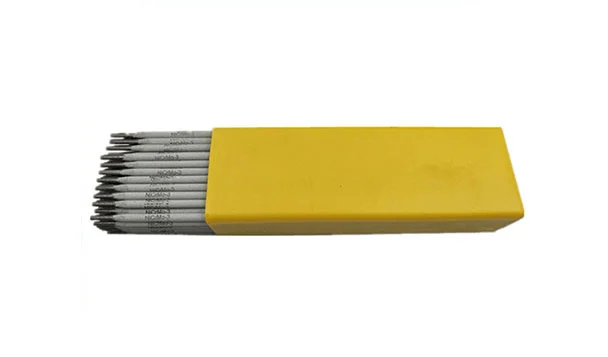
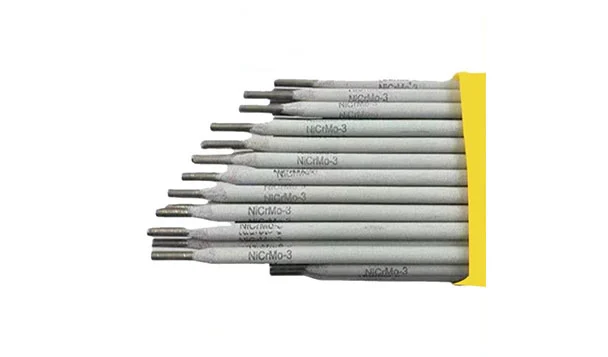
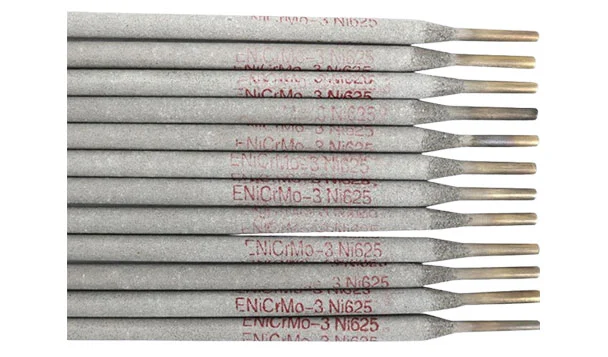
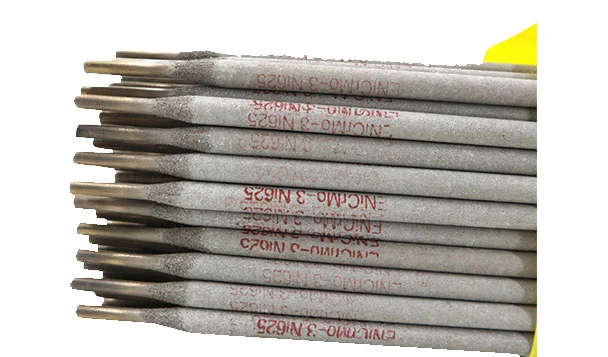
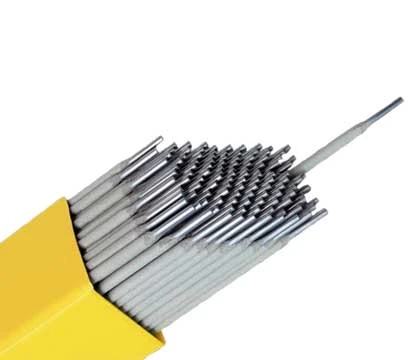
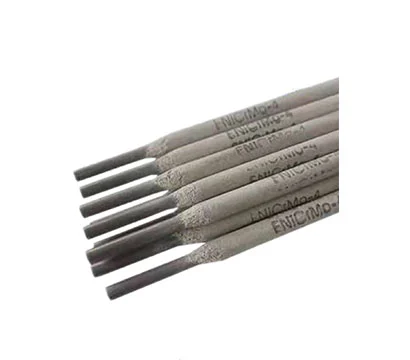
ENiCrMo-3 ENi625 Quick Specifications
| Classification | ENiCrMo-3 |
| Classification reference | AWS A5.11/A5.11M |
| Common designation | ENi625 / Alloy 625 electrode |
| Product type | Nickel-chromium-molybdenum covered electrode |
| Welding process | SMAW / MMA / Stick welding |
| Current and polarity | Direct current electrode positive (DC+ / DCEP) |
| Available diameters | 3.2 mm and 4.0 mm |
| Reference current | 3.2 mm: 70–100A; 4.0 mm: 100–140A |
| Common applications | Alloy 625, compatible nickel alloys and selected dissimilar-metal joints |
Important: The current ranges and composition values on this page are Minghua reference data. Confirm the applicable product TDS, batch certificate, welding position and approved WPS before production welding.
Key Features of ENiCrMo-3 ENi625 Nickel Welding Electrode
Flux-covered nickel alloy electrode designed for stable DC+ stick-welding performance.
Designed to provide crack resistance in qualified nickel-alloy and dissimilar-metal welding procedures.
Suitable for applications requiring corrosion resistance and high-temperature performance.
Commonly associated with Alloy 625 and compatible nickel-chromium-molybdenum alloy welding.
May be used for selected Alloy 800, Alloy 825 and super duplex stainless steel joints when specified by the applicable WPS.
Applicable to pressure equipment, chemical processing, offshore, marine and power-generation projects subject to engineering approval.
What Is ENiCrMo-3 ENi625 Nickel Welding Rod Used For?
ENiCrMo-3 ENi625 nickel welding rod is used for welding compatible nickel-based alloys and selected dissimilar-metal joints where corrosion resistance, crack resistance and elevated-temperature performance are required. Final selection must consider the base-metal grade, service environment, joint design and approved welding procedure.
Alloy 625 welding: Suitable for compatible nickel-chromium-molybdenum components used in corrosive and elevated-temperature environments.
Alloy 800 and Alloy 825 joints: May be selected for specific iron-nickel alloy joints when ENiCrMo-3 is required by the approved WPS.
Super duplex stainless steel: May be used when a nickel-alloy weld-metal system is specifically required by the project procedure.
Pressure vessels and chemical equipment: Used for qualified corrosion-resistant joints in processing and pressure-containing equipment.
Offshore and marine components: Suitable for approved applications exposed to chloride-containing or other aggressive service environments.
Dissimilar-metal welding: Applicable to selected nickel-alloy-to-stainless-steel or nickel-alloy-to-low-alloy-steel transition joints when supported by the project WPS.
ENiCrMo-3 Chemical Composition – Example Deposited Metal Data
The values below are Minghua example deposited-weld-metal data for this product. They should not be treated as universal values for every ENiCrMo-3 electrode or as a replacement for the applicable batch certificate.
| Example Chemical Analysis of Deposited Metal (%) |
| Item | C | S | Mn | Si | P | Cr | Ni | Mo | Cu | Nb | Fe |
| Example value | 0.047 | 0.003 | 0.35 | 0.41 | 0.006 | 21.33 | Balance | 8.51 | 0.026 | 3.48 | 4.48 |
Buyer note: Request the applicable TDS and batch certificate when chemical composition, mechanical properties or project qualification documentation is required.
ENiCrMo-3 Welding Current and Polarity
| Minghua Reference Current – DC+ / DCEP |
| Electrode diameter | 3.2 mm | 4.0 mm |
| Reference welding current | 70–100A | 100–140A |
These values are starting references rather than fixed production settings. Adjust the current according to electrode diameter, welding position, base-metal thickness, joint design and the applicable WPS.
ENiCrMo-3 vs ERNiCrMo-3: What Is the Difference?
ENiCrMo-3 and ERNiCrMo-3 are different filler-metal product forms. They should not be treated as interchangeable simply because both names contain NiCrMo-3.
| Comparison item | ENiCrMo-3 | ERNiCrMo-3 |
| Product form | Flux-covered stick electrode | Bare solid welding wire or TIG rod |
| Main welding process | SMAW / MMA | GTAW, GMAW or SAW, depending on product form |
| AWS specification | AWS A5.11/A5.11M | AWS A5.14/A5.14M |
| Shielding method | Flux-covered electrode; external shielding gas is normally not required | Shielding gas or submerged-arc flux is selected according to the process |
| Product on this page | Yes | No |
ENiCrMo-3 vs ENiCrMo-4 vs ENiCrFe-3 Welding Rods
| Product | Main positioning | Typical application | Selection guidance |
| ENiCrMo-3 ENi625 | Nickel-chromium-molybdenum covered electrode | Alloy 625, compatible Ni-Cr-Mo alloys and selected dissimilar joints | Select when ENiCrMo-3 is specified by the material combination, service requirements or approved WPS. |
| ENiCrMo-4 nickel welding rod | Nickel-chromium-molybdenum covered electrode for a different alloy system | Corrosion-resistant alloy equipment and specified nickel-alloy joints | Select only when the base metal, service condition or approved WPS specifically requires ENiCrMo-4. It is not a universal upgrade from ENiCrMo-3. |
| ENiCrFe-3 nickel welding rod | Nickel-chromium-iron covered electrode | Compatible nickel alloys and selected dissimilar-metal joints | Select when the welding procedure specifically requires a nickel-chromium-iron electrode classification. |
For a more detailed comparison, read ENiCrMo-3 vs ENiCrFe-3 nickel welding rod.
Welding Guidance for ENiCrMo-3 Nickel Alloy Electrode
Welding parameters should be selected according to the base-metal grade, joint design, material thickness, welding position and approved WPS. For corrosion-resistant alloy welding, joint cleanliness, controlled heat input and suitable interpass temperature are important to weld quality.
Use DC+ / DCEP polarity and begin within the applicable reference-current range.
Remove oil, moisture, paint, oxide scale and other contamination before welding.
Use controlled heat input and avoid unnecessarily wide weaving.
Keep electrodes dry and protected from moisture before use.
Follow the Minghua packaging label or product TDS for storage and redrying instructions; do not apply a generic rebaking temperature without confirmation.
Confirm final parameters, preheat and interpass-temperature requirements through the applicable project WPS.
FAQ About ENiCrMo-3 ENi625 Nickel Welding Rod
What AWS specification covers ENiCrMo-3?
ENiCrMo-3 is a covered-electrode classification under AWS A5.11/A5.11M. Buyers should confirm the supplied product classification through the applicable Minghua TDS or certificate of conformity.
What is ENiCrMo-3 ENi625 nickel welding rod used for?
It is used for qualified Alloy 625, compatible nickel-alloy and selected dissimilar-metal joints that require corrosion resistance, crack resistance and elevated-temperature performance.
Can ENiCrMo-3 be used for Alloy 625 welding?
ENiCrMo-3 is commonly associated with Alloy 625 welding. Final suitability must be confirmed against the base-metal specification, service condition and approved WPS.
Is ENiCrMo-3 the same as ERNiCrMo-3?
No. ENiCrMo-3 is a covered stick electrode for SMAW/MMA, while ERNiCrMo-3 is supplied as bare wire or rod for processes such as TIG, MIG or submerged arc welding.
What polarity and current should be used?
Minghua lists DC+ / DCEP polarity. As a reference, a 3.2 mm electrode uses 70–100A and a 4.0 mm electrode uses 100–140A. Final settings depend on the welding position, joint design and approved WPS.
Does ENiCrMo-3 require shielding gas?
ENiCrMo-3 is a flux-covered SMAW electrode and normally does not require an external shielding-gas supply. ERNiCrMo-3 wire used for TIG or MIG is a different product and requires an appropriate shielding system.
Can it weld nickel alloy to stainless steel or low-alloy steel?
It may be used for selected dissimilar-metal joints, but suitability cannot be determined by the electrode name alone. The base metals, dilution, service temperature, corrosion environment and project WPS must be evaluated.
What information is needed for a quotation?
Please provide the required classification, electrode diameter, quantity, packaging, destination, application and certificate requirements. Base-metal grades and the applicable welding procedure are also helpful for product confirmation.
Need ENiCrMo-3 ENi625 Welding Electrodes?
Send Minghua your required diameter, quantity, application, destination and certificate requirements for product confirmation and quotation.
Request a Quote