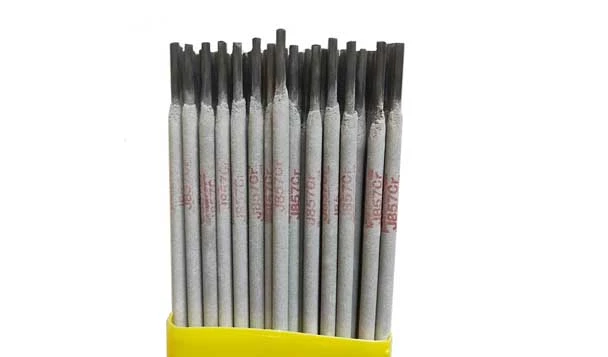
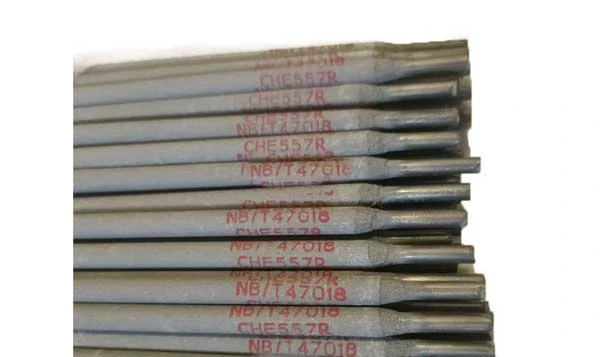
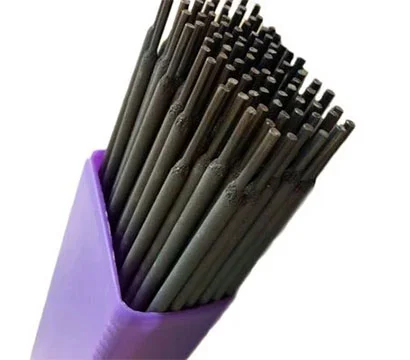
E5016 vs E7016: Are They the Same Electrode?
E5016 and E7016 are commonly used to identify corresponding low-hydrogen electrode classifications under different standard systems. The important point for procurement is not simply which designation appears on the carton, but which standard is required by the project, customer specification or inspection documentation.
| Item | E7016 | E5016 |
|---|
| Standard Reference | AWS A5.1 | GB/T 5117 |
| Electrode Family | Low-hydrogen covered electrode | Corresponding low-hydrogen classification |
| Welding Process | SMAW / MMA | SMAW / MMA |
| Ordering Advice | Specify the required standard, electrode diameter, quantity, documentation and project requirements when requesting a quotation. |
Procurement Note:For code-controlled or inspected welding, confirm the exact product classification shown on the Minghua TDS, certificate and project WPS before approval.
Key Features of E5016 / E7016 Welding Electrode
| ✓ | Low-hydrogen electrode design for structural steel and applications where hydrogen control is important. |
| ✓ | Stable and controllable arc characteristics with low spatter and manageable slag removal. |
| ✓ | Suitable for all-position welding within the applicable product classification and welding procedure. |
| ✓ | Designed for carbon steel and selected low-alloy steel fabrication. |
| ✓ | Available in multiple diameters for industrial fabrication, maintenance and project-based procurement. |
| ✓ | B2B supply support for distributors, contractors, welding consumable dealers and industrial users. |
E5016 / E7016 Typical Chemical Composition
The following values are Minghua typical/sample test data for the current E5016 / E7016 product. They should not be interpreted as universal values for every E7016 electrode produced by every manufacturer.
| Test Item | C | Mn | Si | S | P | Ni | Mo | V |
|---|
| Example Value | 0.065 | 1.13 | 0.28 | 0.006 | 0.015 | 0.65 | 0.009 | 0.005 |
Technical Note:For project qualification, welding procedure approval or incoming inspection, request the applicable Minghua TDS and batch-specific inspection documentation.
E7016 Mechanical Properties & Typical Test Results
The following mechanical-property values are based on the current Minghua product test data after 620℃ × 1 h heat treatment.
| Test Item | Rm (MPa) | ReL / Rp0.2 (MPa) | A (%) | KV2 at -40℃ (J) |
|---|
| Example Value | 550 | 450 | 30 | 138 |
| Diffusible Hydrogen Reference | ≤5.0 ml / 100 g deposited metal |
| Test Method | Thermal conductivity method or mercury method |
| Radiographic Inspection Reference | Level I |
Actual values may vary by production batch and test condition. Buyers requiring project-specific acceptance values should request the applicable inspection certificate before approval.
E7016 / E5016 Welding Current, Diameter & Polarity
Minghua's current product data lists the following reference welding-current ranges. The applicable operating condition is AC or DC electrode positive (DCEP / DC+), subject to the specific product specification and approved welding procedure.
| Electrode Diameter | Recommended Current | Reference Polarity | Position |
|---|
| Φ3.2 mm | 80–120 A | AC / DCEP (DC+) | All-position classification* |
| Φ4.0 mm | 130–180 A | AC / DCEP (DC+) | All-position classification* |
| Φ5.0 mm | 170–240 A | AC / DCEP (DC+) | Verify procedure and position |
*Actual amperage, polarity and usable welding position depend on electrode diameter, joint configuration, power source, manufacturer instructions and the approved WPS.
For a more detailed explanation of polarity, amperage and storage, see the E7016 Welding Rod Guide.
E7016 Welding Electrode Applications
E7016 is commonly considered for carbon-steel and selected low-alloy-steel fabrication where a compatible low-hydrogen SMAW electrode is specified. Final use should always follow the actual base-metal grade, welding code and qualified WPS.
Shipbuilding
Applicable to compatible carbon- and low-alloy-steel structural joints in hull sections, stiffeners and fabricated assemblies where the project procedure specifies a suitable low-hydrogen electrode.
Offshore & Structural Fabrication
Can be used for selected support frames, structural assemblies and welded components when required mechanical properties, hydrogen control and procedure requirements match the E7016 product.
Pressure Vessels & Pressure-Bearing Components
E7016 may be considered for compatible pressure-equipment steels only where the applicable material specification, welding code and approved WPS permit the classification. For more information, review Minghua's pressure vessel welding solutions.
Bridges & Structural Steel
Suitable for specified structural-steel fabrication where the required strength class, welding-position capability and low-hydrogen requirements match the electrode and project procedure.
Heavy Equipment & Industrial Repair
Can be selected for fabrication or repair of compatible carbon- and low-alloy-steel components after confirming base-metal strength, joint design, service loading and welding-procedure requirements.
E5016 / E7016 vs E7018: Which Low-Hydrogen Electrode Should You Choose?
E7016 and E7018 are both low-hydrogen covered electrodes used for structural steel welding, but their coating formulations and operating characteristics differ.
| Factor | E5016 / E7016 | E7018 |
|---|
| Electrode Family | Low hydrogen | Low hydrogen / iron powder |
| Strength Class | 70 ksi class under AWS E7016 | 70 ksi class |
| Deposition Characteristics | Controlled deposition | Typically higher deposition potential |
| Typical Selection | Structural and specified low-hydrogen welding | Structural and production fabrication |
| Final Choice | Select according to the project specification, base metal, current/polarity, required deposition characteristics and WPS. |
For a detailed technical comparison, read E7016 vs E7018 Welding Electrode or view the E7018 welding electrode product page.
Projects involving higher-strength or special low-alloy steels may require a different classification. For example, buyers can review E9018-G welding rod and verify the required mechanical properties against the approved WPS.
E7016 Electrode Storage & Moisture Control
Low-hydrogen electrodes require controlled storage and handling because excessive moisture pickup can compromise the intended low-hydrogen performance of the consumable.
| Unopened Packages | Store in a clean, dry environment and protect packaging from moisture damage. |
| After Opening | Control atmospheric exposure and follow the storage procedure specified for the particular product. |
| Re-Drying / Rebaking | Do not apply a generic oven cycle. Follow the applicable Minghua product instructions, project specification and welding procedure. |
| Critical Welding | Maintain documented handling practices where hydrogen-control requirements are part of the approved WPS or project code. |
For more detailed handling guidance, see the E7016 polarity, current and storage guide.
E7016 / E5016 Welding Electrode Price, Packaging & Bulk Ordering
The price of E7016 / E5016 welding electrodes depends on electrode diameter, packaging, order quantity, documentation requirements, raw-material cost and delivery terms. For this reason, industrial and distributor orders are normally quoted according to the actual purchasing specification rather than a single fixed price per kg.
| Procurement Item | Available Support |
|---|
| Electrode Diameter | Φ3.2 mm, Φ4.0 mm, Φ5.0 mm or project-based confirmation |
| Packaging | Carton, box or distributor packaging requirements |
| Technical Documents | Specification sheet, typical inspection data and quotation support |
| Buyer Type | Distributors, contractors, fabrication workshops and industrial users |
| Quote Information | Required standard, diameter, quantity, packaging, destination and documentation requirements |
Request E7016 / E5016 Welding Electrode PriceSend Minghua your required
standard, electrode diameter, quantity, packaging and destination for a project or bulk quotation.
Contact Minghua for an E7016 / E5016 Quote E7016 Welding Electrode FAQs
1. What is E7016 welding electrode used for?
E7016 is a low-hydrogen SMAW electrode used for compatible carbon-steel and selected low-alloy-steel fabrication. Typical project applications can include structural steel, shipbuilding, offshore fabrication, pressure-related equipment and industrial repair when the applicable WPS specifies a compatible electrode.
2. What is the difference between E5016 and E7016?
E7016 is an AWS A5.1 designation, while E5016 is commonly used as the corresponding GB/T 5117 classification. Buyers should confirm which standard is required on the quotation, certificate and project documentation.
3. What is the difference between E7016 and E7018?
Both are low-hydrogen 70 ksi-class covered electrodes. E7018 is characteristically associated with an iron-powder low-hydrogen covering, while E7016 belongs to the low-hydrogen family without the same E7018 iron-powder classification. This gives the two electrodes different deposition and operating characteristics.
4. What polarity is used for E7016 welding electrodes?
The current Minghua product data lists AC and DC electrode positive (DCEP / DC+) as reference operating conditions. Always verify the exact product label, technical datasheet and WPS before welding because operating recommendations can vary between products.
5. What current should I use for a 3.2 mm or 4.0 mm E7016 electrode?
Minghua's current reference data lists approximately 80–120 A for Φ3.2 mm and 130–180 A for Φ4.0 mm. The actual setting depends on welding position, joint design, power source, arc length and the qualified welding procedure.
6. How should low-hydrogen E7016 electrodes be stored?
Keep unopened electrodes dry and control atmospheric exposure after opening. Heated storage or re-drying requirements should follow the applicable Minghua product instructions and welding procedure. Do not apply one generic rebaking temperature to every E7016 product.
Related E7016 Technical Guides
Need E7016 Technical Data or a Bulk Quote?
Send Minghua your required standard, base-metal grade, electrode diameter, quantity, packaging and destination. For inspected or code-controlled projects, include your required mechanical properties and documentation requirements.
Request E7016 / E5016 Price & Technical Data