Industrial manufacturing is undergoing a rapid transformation driven by automation, digitalization, and material innovation. As industries such as aerospace, automotive, rail transit, heavy machinery, and precision engineering place higher demands on structural strength, reliability, and production efficiency, welding and metal processing technologies must evolve beyond traditional capabilities. Today, integrated solutions combining laser machining, advanced welding consumables, and intelligent production frameworks are becoming essential for achieving higher competitiveness and engineering excellence.
The Role of Advanced Machining in Intelligent Manufacturing
Precision machining is fundamental to modern production, especially when working with high-strength alloys, lightweight structural components, and complex geometries. Traditional lathe and milling processes, although mature, increasingly face challenges such as limited precision scalability, inconsistency under high-speed conditions, and higher energy consumption.
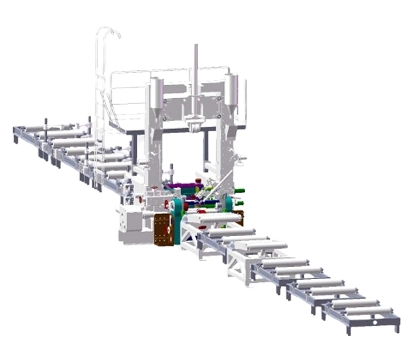
This gap is being addressed by intelligent processing equipment such as laser lathe machine technology. By utilizing high-intensity focused laser beams, manufacturers can achieve significantly higher accuracy, stable cutting performance, and cleaner edges compared to mechanical cutting methods. Laser machining minimizes thermal distortion, reduces tool wear, and supports digital programming, making it extremely compatible with Industry 4.0 smart factory environments.
Technical Advantages of Laser Lathe Systems
Laser-based lathe systems provide measurable benefits in engineering terms including:
Higher dimensional accuracy due to reduced thermal deformation
Capability to machine hard-to-cut metals without excessive tool stress
Improved repeatability under continuous operation
Integration with robotic handling and CNC systems
Reduced secondary finishing requirements
This creates substantial value in high-precision applications such as turbine components, aerospace structural parts, and precision mechanical assemblies.
Engineering Comparison: Laser Machining vs Traditional Lathe Cutting
| Performance Metric | Laser Processing | Traditional Lathe |
|---|
| Dimensional Precision | Very High | Moderate |
| Thermal Impact on Material | Low & Controllable | Higher |
| Processing Speed | High | Medium |
| Wear of Tools | Minimal | Significant |
| Digital Integration | Excellent | Limited |
Welding for Harsh Industrial Environments — Wear, Impact and Reliability
Beyond machining accuracy, a large proportion of industrial components must also withstand heavy abrasion, impact loads, and surface fatigue during operation. This is particularly true in industries such as mining, cement production, metallurgy, construction machinery, marine engineering, and resource extraction.
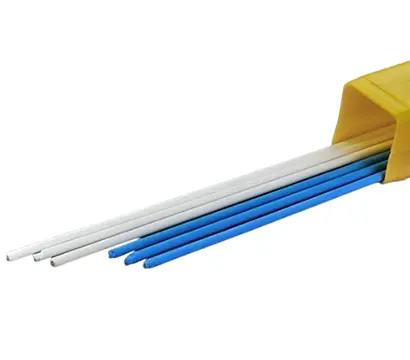
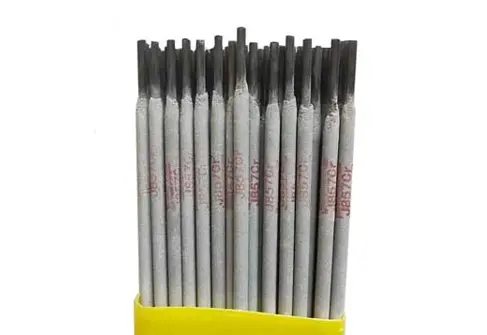
To improve wear resistance and service life, surfacing and reinforcement welding are widely applied. High-performance solutions such as carbide welding rod provide extremely high hardness, abrasion resistance, and structural reinforcement capability. These materials help maintain component integrity under severe friction conditions, reducing unexpected downtime, minimizing replacement frequency, and lowering total lifecycle maintenance costs.
Engineering Value of Wear-Resistant Welding Solutions
Key benefits include:
Higher hardness and extended surface life
Strong bonding strength with substrate materials
Capability to withstand shock and vibration
Suitability for repairing high-value equipment components
This not only protects critical industrial assets but also improves production continuity and economic efficiency.
Aluminum Welding — Balancing Strength, Weight, and Structural Integrity
As industries strive for lighter yet stronger structures, aluminum and aluminum alloys have become key strategic materials. Lightweight design helps reduce fuel consumption in transportation, enhances payload efficiency in aerospace, and improves system performance in industrial machinery.
However, aluminum welding is technically demanding due to thermal conductivity, susceptibility to cracking, and metallurgical behavior. Therefore, selecting the correct filler material is essential.
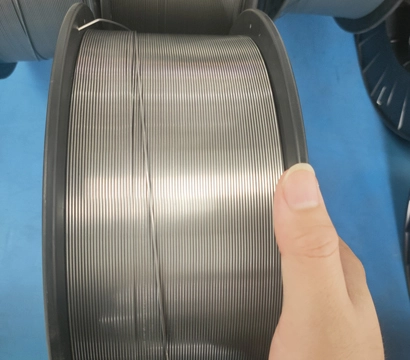
Welding wires such as er2319 are widely used in high-strength aerospace aluminum applications, offering excellent mechanical performance and resistance to stress-related cracking. Meanwhile, er5556 is often used in structural aluminum components because of its balanced strength, corrosion resistance, and weldability, making it highly suitable for transportation systems, marine structures, and industrial machinery frames.
Application Comparison of Aluminum Welding Materials
| Welding Wire | Structural Feature | Typical Industrial Use |
|---|
| er2319 | High Strength & Stability | Aerospace / Defense |
| er5556 | Structural Durability & Crack Resistance | Automotive / Marine / Machinery |
Achieving Manufacturing Excellence Through Integration
Future-oriented industrial manufacturing is not about upgrading a single technology — it is about creating a unified ecosystem where intelligent machining, advanced welding materials, and automation operate cohesively.
A truly integrated strategy involves:
High-performance welding consumable selection tailored to environment and stress conditions
Advanced machining capabilities to ensure dimensional precision and assembly compatibility
Automated handling and robotic assistance to support production consistency
Smart monitoring systems to ensure quality traceability and process stability
The result is improved production efficiency, enhanced product reliability, and stronger global competitiveness.
Engineering Outlook and Industry Development Direction
As global manufacturing continues transitioning toward intelligent production models, several trends will shape the future of welding and metal processing:
Increased combination of robotic welding with advanced filler materials
Greater reliance on laser processing for precision manufacturing
Wider adoption of aluminum and lightweight alloys
Growing focus on lifecycle cost management rather than single production expense
Tight integration between digital monitoring, CNC control, and material engineering
Conclusion
From advanced cutting technologies and intelligent CNC systems to high-performance welding consumables and aluminum structural materials, integrated welding and metal processing solutions form the technical foundation of intelligent manufacturing. Technologies such as laser lathe machine, wear-resistant reinforcement solutions like carbide welding rod, and high-performance aluminum welding materials including er2319 and er5556 together enable industries to meet higher standards of efficiency, durability, and structural excellence.
Through continuous innovation in materials, processes, and digital manufacturing strategies, industrial manufacturers can confidently move toward a future defined by precision, reliability, and sustainable productivity.