Background and Motivation
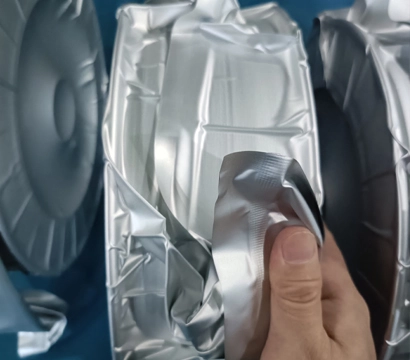
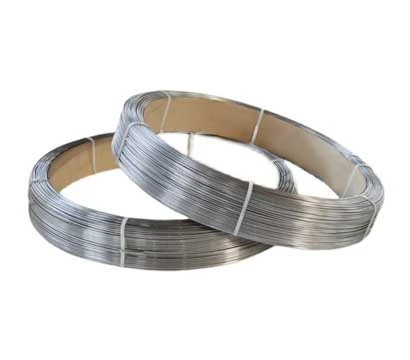
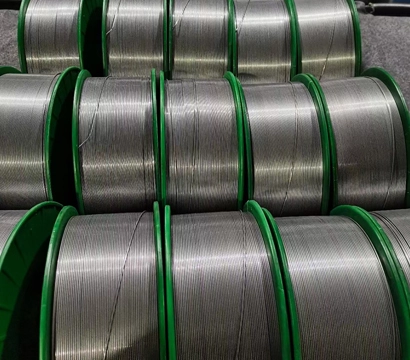
Wire-arc and laser-based additive manufacturing technologies have attracted significant attention for the fabrication of large-scale aluminum alloy components due to their high deposition efficiency and material utilization. Among various filler materials, ER4047 aluminum alloy wire exhibits excellent melt fluidity, a low coefficient of thermal expansion, and superior resistance to corrosion and hot cracking. These characteristics contribute to improved service stability of additively manufactured components, making ER4047 particularly suitable for additive manufacturing applications. In addition, the chemical composition of a 6082 aluminum alloy substrate is similar to that of ER4047 wire, which effectively reduces compositional mismatches at the interface and enhances metallurgical bonding during deposition.
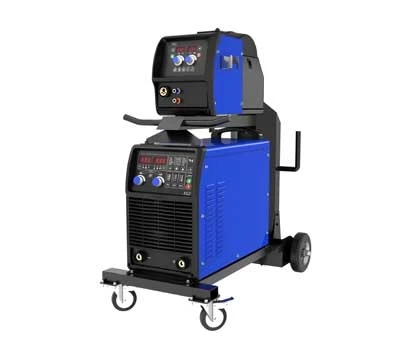
Laser–arc hybrid additive manufacturing (LAHAM), which combines the advantages of laser and arc heat sources, has been widely recognized for its ability to significantly improve deposition efficiency and process stability while enhancing microstructural uniformity and geometric accuracy. By introducing a laser to assist the arc, LAHAM enables better control of the molten pool, higher energy density, and more stable metal transfer compared with conventional wire arc additive manufacturing (WAAM). Furthermore, the incorporation of laser beam oscillation into the hybrid process—referred to as oscillating laser–arc hybrid additive manufacturing (OLAHAM)—has emerged as a promising strategy for further optimizing molten pool dynamics and forming quality.
Challenges in Aluminum Alloy Additive Manufacturing
Despite these advantages, additive manufacturing of aluminum alloys remains challenging. Aluminum alloys possess a thermal conductivity and thermal expansion coefficient much higher than those of commonly used stainless steels. As a result, laser irradiation can easily cause molten droplets to deviate from the target deposition direction, leading to severe thermal stress concentration, cracking, spatter, and porosity during the deposition process. Moreover, the relatively wide solidification temperature range of aluminum alloys increases the complexity of process control, making it difficult to achieve stable deposition and consistent forming quality. Although previous studies have demonstrated the benefits of LAHAM for aluminum alloys and the effectiveness of OLAHAM for stainless steels, systematic investigations into the process stability and forming characteristics of aluminum alloy OLAHAM are still limited.
To address these challenges, Associate Professor Yunfei Meng and his research team from Southwest Jiaotong University conducted an in-depth study on improving deposition stability and forming precision of aluminum alloys using laser–arc hybrid additive manufacturing with beam oscillation. Their work, entitled “Deposition Stability and Forming Characteristics in Laser-Arc Hybrid Additive Manufacturing of Aluminum Alloy Through Beam Oscillation,” was published in the International Journal of Precision Engineering and Manufacturing–Green Technology. The study focuses on thin-walled aluminum alloy structures fabricated using ER4047 wire and a 6082 aluminum alloy substrate, systematically comparing three processes: conventional WAAM, LAHAM, and OLAHAM with a laser oscillation frequency of 300 Hz.
Effect of Beam Oscillation on Deposition Stability
The experimental results reveal that OLAHAM exhibits clear advantages over both WAAM and conventional LAHAM. Compared with WAAM, the introduction of a laser heat source in LAHAM significantly improves molten pool stability and reduces geometric irregularities. However, further improvements are achieved when laser beam oscillation is applied. OLAHAM effectively optimizes droplet transfer behavior, leading to a more uniform and controllable deposition process. The oscillating laser induces a high-speed rotating vortex within the molten pool, which captures incoming droplets and mitigates the disruptive impact of droplet impingement. This mechanism not only stabilizes metal transfer but also suppresses spatter formation and molten pool fluctuations.
Microstructural analysis shows that OLAHAM significantly reduces porosity and refines grain size compared with WAAM and LAHAM. The enhanced stirring effect caused by beam oscillation promotes more uniform heat distribution and solute mixing, thereby inhibiting the formation of coarse grains and reducing microstructural heterogeneity. In addition, fluctuations in microhardness along the build direction are noticeably reduced in OLAHAM-fabricated components, indicating improved structural uniformity. Mechanical testing further demonstrates that OLAHAM specimens exhibit higher elongation, reflecting enhanced ductility and overall mechanical performance.