E-mail
en
Welding Equipment And Welding Consumables FAQs

FAQs

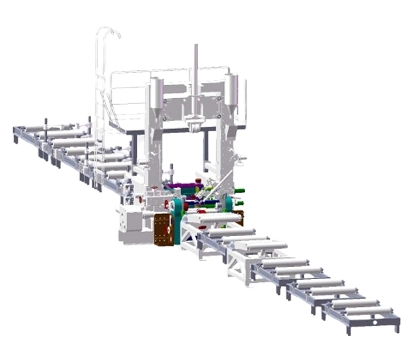
What is an H-beam(PEB) welding line, and what are its key components?

An H-beam welding line is a complete, automated production system for manufacturing H-shaped steel beams. Its main equipment typically include a beam assembling machine, straightening machine, and welding machine, main arc welding systems (often submerged arc welding - SAW), turn-over devices, and a control system. Our AMH lines are designed for high efficiency and consistent weld quality in structural steel fabrication.

How does a laser lathe improve welding preparation compared to a conventional lathe?

A laser lathe (or laser cutting lathe) integrates laser cutting technology with rotary motion, allowing for high-precision, non-contact beveling, groove cutting, and end-prep on pipes, tubes, and round bars. It offers superior speed, complex profile capability, and eliminates tool wear issues associated with conventional mechanical lathes, ensuring perfect fit-up for critical welds.

What are the advantages of using aluminum-magnesium alloy welding wire (like 5356/5183)?

Aluminum-magnesium alloy wire (e.g., ER5356, ER5183) provides high strength, excellent corrosion resistance (especially in marine environments), and good crack resistance. It's the preferred choice for welding 5xxx and 6xxx series aluminum alloys in shipbuilding, transportation, and structural applications where strength-to-weight ratio is crucial.

When should I use ER309LMo stainless steel welding wire over standard ER309L?

Use ER309LMo when joining dissimilar metals (like carbon steel to stainless) or overlaying on carbon steel where enhanced resistance to pitting and crevice corrosion is required in chloride environments. The added Molybdenum (Mo) provides this superior corrosion resistance compared to standard ER309L, making it ideal for chemical processing and offshore applications.


What are the specific applications for WC20 (2% Ceriated) tungsten electrodes?

WC20 tungsten electrodes (2% Cerium Oxide) are excellent all-rounders for both AC (aluminum/magnesium) and DC welding. They offer easy arc starting at lower voltages, good arc stability, and lower burn-off rates than pure tungsten. They are a versatile, non-radioactive choice for precision TIG welding across various metals, especially where consistent performance is key.


What factors should I consider when choosing a welding electrode coating machine?

Key factors for a welding electrode coating machine include: production capacity (kg/hr), type of coating (extrusion vs. dipping), drying system efficiency, automation level, and compatibility with various coating formulations (cellulosic, basic, rutile). A reliable machine ensures consistent coating thickness and composition, directly impacting electrode performance.


Can your H-beam welding line handle variable beam lengths and web/flange thicknesses?

Yes, our advanced H-beam welding lines are designed with adjustable clamping and positioning systems to accommodate a wide range of beam lengths, heights (web), and widths (flange). CNC controls allow for quick changeover, making them suitable for both batch production and customized structural steel fabrication.


Is laser pipe end-prep suitable for high-alloy materials like duplex stainless steel?

Absolutely. Laser-based end preparation is ideal for high-alloy materials. It produces a clean, oxidation-free cut edge with minimal heat-affected zone (HAZ), preventing the loss of corrosion resistance in materials like duplex and super duplex stainless steels, which is a risk with plasma or mechanical methods.


How does the storage and handling of aluminum-magnesium alloy wire differ from steel wire?

Aluminum-magnesium wire is much more sensitive to moisture and contamination. It must be stored in its original, sealed packaging in a dry environment and used with Teflon or Nylon liner in the feed system to prevent shaving and “bird-nesting.” Proper handling prevents porosity and ensures optimal weld quality.


What welding process is ER309LMo wire typically used with?

ER309LMo is primarily used with Gas Metal Arc Welding (GMAW/MIG) and Gas Tungsten Arc Welding (GTAW/TIG) processes. For submerged arc welding (SAW), a matching flux is required. It is suitable for all-position welding when used with the appropriate shielding gas (e.g., Argon + 2-3% CO2).


Why might I choose WC20 over Thoriated (WT20) tungsten electrodes?

Choose WC20 primarily for safety and environmental reasons, as it is non-radioactive. While WT20 has excellent arc characteristics, Ceriated tungsten offers comparable performance in many applications without the health and disposal concerns associated with thorium, aligning with modern workshop safety protocols.


What is the difference between a manual and an automatic welding electrode coating machine?

A manual machine requires operator intervention for core wire feeding and coating application, suitable for R&D or small batches. An automatic welding electrode coating machine integrates wire feeding, coating extrusion, cutting, and conveying into a continuous, PLC-controlled line, ensuring high-volume production with consistent quality and reduced labor.


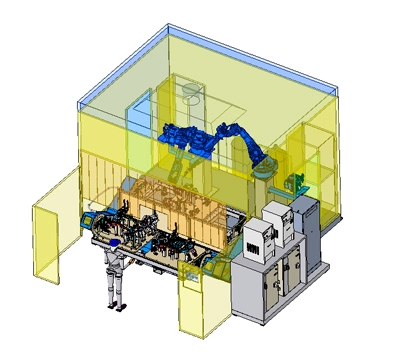
What safety features are critical on a high-power laser lathe system?

Essential safety features include: Full Class 1 laser enclosure with interlocked doors, laser-safe viewing windows, fume extraction systems, emergency stop buttons, and clear warning signs/labels. Proper training on laser safety (ANSI Z136.1) for operators is non-negotiable.

Can you provide aluminum-magnesium alloy wire in large spools for robotic welding cells?

Yes, we supply aluminum-magnesium welding wire on large-diameter spools (e.g., 300mm/15”, 500lb drums) specifically designed for high-uptime robotic and automated welding systems. This minimizes wire changeovers and supports continuous production in manufacturing facilities.


How do I maintain consistent quality when producing electrodes with my coating machine?

Consistency requires strict control of raw materials (core wire & flux ingredients), regular calibration of the extrusion die and feed mechanism, maintaining proper slurry viscosity, and a controlled, multi-stage drying/baking oven profile. Implementing a robust quality management system (like ISO 9001) around the electrode coating machine operation is essential.


What is the quality assurance of Minghua's High-End Welding Consumables and Equipment?

Strictly follow international quality standards to ensure the high quality,consistency of each batch of welding consumables. We provide comprehensive after-sales service and technical support to meet our customer needs.

What is the delivery time?

Welding material delivery time ranges from 3 days to 30 days (depending on quantity, packing, etc.). As one of the leading welding machine suppliers, our welding equipment delivery time is from 7 days to 60 days. Machines for production lines, including automatic welding lines, have a delivery time from 20 days to 90 days.

What transportation methods does Minghua use?

Mostly by sea and by train, some times by air, Express company,or speical delivery. 

How can I pay?

 By bank account, paid through alibaba.com account,payble, wechat pay, Alipay, Western Union,cashes, etc.

Does Minghua accept OEM?

We accept OEM and ODM for welding materials and different welding machines.

Contact Us


Advance with The Times; Enjoy dividends of The Times.
Contact Us
+8615020018612 aliya@amhmachine.com
4 floors, building 3, zhongrun centry centre, No.12111 of jingshi road, lixia district, Jinan, Shandong, China
Follow Us
Contact Us
+8615020018612 aliya@amhmachine.com
4 floors, building 3, zhongrun centry centre, No.12111 of jingshi road, lixia district, Jinan, Shandong, China
Follow Us