2025-07-31
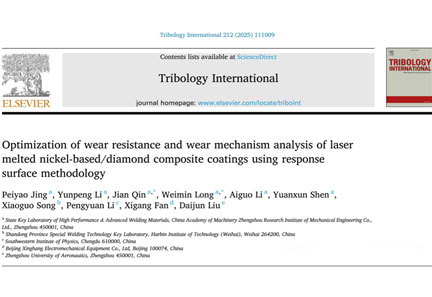
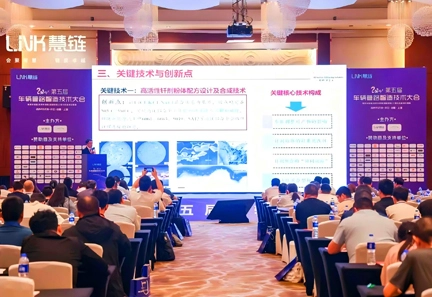
Recently, a team from the National Key Laboratory of High-Performance New Welding Materials at the Zhengzhou Institute of Mechanical Engineering published an article titled "Optimization of Wear ...
Read More

Choosing between ER4043 aluminum welding wire and ER5356 aluminum welding wire depends on the base aluminum alloy, required mechanical properties, corrosion resistance, appearance requirements, and fabrication conditions. ER4043 is typically selected for general-purpose aluminum welding because it offers excellent fluidity, reduced cracking risk, and a smooth weld appearance, while ER5356 is preferred when higher tensile strength, better ductility, and anodizing compatibility are required. For manufacturers producing aluminum components, understanding the differences between these aluminum welding wire options helps improve weld quality and production efficiency.
ER4043 aluminum welding wire is one of the most widely used aluminum filler metals for MIG and TIG welding applications. Similar aluminum-silicon filler options such as ER4047 welding wire are also selected for applications where improved fluidity and lower melting characteristics are required. It is an aluminum-silicon alloy filler wire containing approximately 5% silicon, which improves weld pool fluidity and reduces sensitivity to hot cracking.
Manufacturers often choose China 4043 welding wire for applications where smooth bead appearance, easy operation, and reliable weld performance are important. It is commonly used for automotive parts, aluminum structures, machinery components, and general fabrication.
Key advantages of ER4043 include:
- Excellent weld puddle control and flow characteristics
- Lower melting point compared with many aluminum filler alloys
- Reduced risk of weld cracking
- Attractive finished weld appearance
- Suitable performance for many 6000-series aluminum alloys
ER4043 is especially suitable for welding aluminum alloys such as 6061 and 6063 when maximum joint strength is not the primary requirement.
ER5356 aluminum welding wire is an aluminum-magnesium alloy filler metal containing about 5% magnesium. Compared with ER4043, it provides higher tensile strength and better ductility, making it a preferred option for structural and load-bearing aluminum applications.
Manufacturers frequently use ER5356 mig wire for marine equipment, transportation components, pressure vessels, and applications requiring stronger welded joints.
Main benefits of ER5356 include:
- Higher weld strength than ER4043
- Better corrosion resistance in marine environments
- Improved anodized color matching
- Good performance for structural aluminum fabrication
- Excellent wire feeding characteristics in MIG welding
However, ER5356 requires careful alloy compatibility evaluation because it may not be the best choice for every aluminum grade or high-temperature service application.
Feature | ER4043 Aluminum Welding Wire | ER5356 Aluminum Welding Wire |
Alloy Type | Aluminum-silicon filler alloy | Aluminum-magnesium filler alloy |
Primary Alloy Element | Silicon (Si) | Magnesium (Mg) |
Strength | Moderate tensile strength | Higher tensile strength |
Weld Appearance | Produces a smooth, clean, and visually attractive weld bead | Produces a strong weld bead with good appearance |
Crack Resistance | Excellent hot cracking resistance due to silicon content | Good crack resistance, suitable for structural applications |
Corrosion Resistance | Good corrosion resistance for general aluminum fabrication | Better corrosion resistance, especially in marine environments |
Anodizing Performance | Limited color matching after anodizing | Better anodized color matching and finishing performance |
Weldability | Excellent fluidity, easy arc control, and good weld pool flow | Good wire feeding performance and stable welding characteristics |
Common Aluminum Alloys | Commonly used with 6061, 6063, and other 6000-series aluminum alloys | Commonly used with 5xxx-series aluminum alloys and structural aluminum applications |
Typical Applications | General fabrication, automotive parts, machinery components, aluminum frames, and repair welding | Marine equipment, transportation components, pressure vessels, structural aluminum products |
Best Choice When | Weld appearance, easy operation, and reduced cracking risk are priorities | Higher strength, improved durability, corrosion resistance, or anodizing compatibility are required |
Quick Selection Guide:
Choose ER4043 welding wire when you need excellent weld fluidity, smooth appearance, and reliable performance for general aluminum fabrication.
Choose ER5356 welding wire when the application requires higher strength, better corrosion resistance, or anodized finishing compatibility.
Consider ER5556 welding wire for applications requiring even higher-strength aluminum filler performance.
Both ER4043 and ER5356 can be used with 6061 aluminum. ER4043 is often selected when better weld appearance and reduced cracking risk are priorities. ER5356 is preferred when higher strength and improved corrosion resistance are needed.
Manufacturers should consider ER5356 when welded parts require higher mechanical strength, marine corrosion resistance, or anodized finishing. Structural aluminum products commonly benefit from the properties of ER5356.
ER5556 aluminum welding wire is another aluminum-magnesium filler option designed for applications requiring higher strength. Manufacturers may also evaluate ER5554 welding wire for specific aluminum-magnesium welding applications where alloy compatibility and mechanical requirements need to be carefully considered.
Selecting the correct aluminum welding wire requires evaluating:
1. Base aluminum alloy compatibility
2. Required tensile strength
3. Operating environment
4. Welding process and equipment
5. Surface finishing requirements
For manufacturers, filler metal selection directly affects productivity, weld durability, and final product quality. AMH provides aluminum welding wire solutions including ER4043, ER5356, and ER5556 options for different industrial welding requirements.
ER4043 aluminum bronze welding wire is used for general aluminum welding applications where good weld appearance, easy operation, and crack resistance are required.
Yes. ER5356 generally provides higher tensile strength and better ductility compared with ER4043, making it suitable for structural aluminum welding.
ER5356 is usually preferred for marine applications because its magnesium content provides improved corrosion resistance.
Yes. ER4043 is commonly used for welding 6061 aluminum, especially when appearance and weldability are important.
The selection depends on the base alloy, strength requirements, corrosion environment, finishing process, and welding method.