2024-11-29
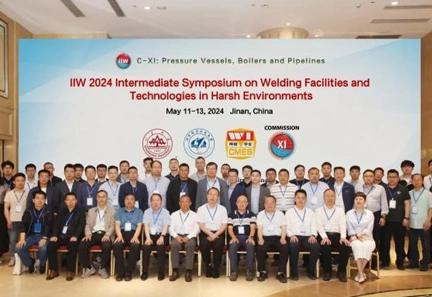
From May 11 to 13 2024, the International Conference on Welding Equipment and Technology in Harsh Environments of the C-XI Pressure Vessels, Boiler&Pipelines Committee of the International Institu...
Read More

E9018-G welding rod is a low-hydrogen, low-alloy covered electrode classified under AWS A5.5 for Shielded Metal Arc Welding (SMAW). It belongs to the 90 ksi strength class and is considered when a welding project requires higher-strength weld metal, controlled hydrogen and project-specific low-alloy performance.
Unlike a single fixed alloy grade, the “G” designation does not represent one universal chemistry for every E9018-G product. Engineers should therefore evaluate the base metal, required strength and impact toughness, service conditions and qualified welding procedure instead of selecting an electrode by classification name alone.
This guide explains what E9018-G means, when it may be selected for high-strength or low-temperature steel, how it differs from related low-hydrogen electrodes and what engineers and purchasing teams should confirm before specifying it.
The E9018-G designation gives engineers a quick indication of the electrode family, strength class and welding characteristics. However, it does not replace the manufacturer's actual product data or the requirements of an approved welding procedure.
E9018-G should be selected because its classification and product-specific properties match the engineering requirements of a welding project, not simply because the structure is described as “high strength” or “low temperature.” Several factors commonly indicate that an E9018-G electrode should be evaluated.
E9018-G belongs to the 90 ksi strength class. It may therefore be considered when the project requires higher-strength weld metal than commonly used 70 ksi or 80 ksi electrode classes.
Low-hydrogen electrode handling may be important for high-strength and crack-sensitive welded joints. Storage, rebaking and atmospheric exposure should therefore follow the applicable product instructions and welding procedure.
Projects involving low service temperatures or pressure-bearing components may specify impact-testing requirements. Engineers should compare the required Charpy impact criteria with the actual electrode product data and procedure qualification.
When a qualified WPS, engineering specification or customer requirement explicitly calls for an E9018-G electrode, product-specific chemistry, strength, impact properties and operating recommendations should be verified before use.
E9018-G may appear in welding specifications for demanding low-alloy steel fabrication. Typical project contexts can include the following, provided that the actual electrode properties match the base material and welding procedure.
These electrodes should not be treated as interchangeable simply because they belong to low-hydrogen covered-electrode families. Their strength classes, alloy classifications and typical selection logic differ.
| Electrode | Strength Class | Main Difference | Typical Selection Logic |
| E7018 | 70 ksi | Common low-hydrogen structural electrode class | Consider when the project requires a compatible 70 ksi low-hydrogen electrode. |
| E8018-C3 electrode | 80 ksi | Specific C3 low-alloy classification | Consider when E8018-C3 chemistry and low-temperature performance are specified by the project. |
| E9018-G | 90 ksi | General “G” low-alloy classification | Consider when project-specific E9018-G properties satisfy the required base-metal and mechanical-property criteria. |
| E9018-M | 90 ksi | More specifically controlled classification requirements | Select when the engineering specification or WPS explicitly requires the E9018-M classification. |
The correct electrode therefore depends on much more than tensile-strength class. Chemical requirements, toughness, base-metal compatibility, service conditions and the qualified welding procedure should be evaluated together.
Engineers and purchasing teams should collect the main technical requirements before specifying E9018-G. This avoids selecting an electrode based only on a familiar AWS designation.
Moisture control is an important part of low-hydrogen electrode handling. Storage and rebaking requirements can vary by product and project, so operators should follow the electrode manufacturer's current instructions together with the approved welding procedure.
If your project involves a broader range of cold-service welding consumables, Minghua's low temperature welding rods category provides additional electrode options for comparison.
E9018-G is an AWS A5.5 low-alloy covered-electrode classification in the 90 ksi strength class. The designation also indicates all-position capability and electrode-family coating and operating characteristics, while the “G” identifies a general low-alloy classification.
E9018-G may be used for high-strength low-alloy steel, selected low-temperature applications, pressure-related components and other demanding welded structures when the product properties match the base material and qualified welding procedure.
No. E7018 belongs to the 70 ksi strength class, while E9018-G belongs to the 90 ksi class and carries a general low-alloy “G” designation. Selection should be based on the project specification and required weld-metal properties rather than treating the two electrodes as interchangeable.
E9018-G and E8018-C3 belong to different strength and alloy classifications. E9018-G should be evaluated when a 90 ksi general low-alloy classification is required, while E8018-C3 should be selected when the C3 classification and its associated requirements are specified.
No. The “G” designation should not be interpreted as one universal manufacturer chemistry. Engineers and buyers should review the actual deposited-metal composition, mechanical properties and applicable specification for the specific E9018-G product being considered.
For Minghua-specific deposited-metal chemistry, mechanical properties, available electrode diameters, DC+ reference welding current and product application data, review the E9018-G electrode specification.
Provide the base-metal grade, required strength, impact-toughness criteria, service temperature, applicable WPS or PWHT requirements and expected purchasing quantity. Minghua can use this information to help evaluate an appropriate low-alloy welding consumable for your project.