MMA 250S Technical GuideThis online MMA 250 welding machine manual explains how to identify, connect, set up and troubleshoot the current Minghua MMA 250S inverter welder. The machine is designed for manual metal arc welding (MMA/SMAW), with a 20–130A output range on the 220V version or 20–150A on the 380V version. Use this guide together with the rating plate and documentation supplied with your specific machine.
20–130A 220V output range
20–150A 380V output range
15% Listed duty cycle
MMA / SMAW Manual stick-welding process
Important model clarification: "MMA 250" is a model designation and does not automatically mean that this machine supplies a 250A rated output. The current Minghua MMA 250S is listed at 20–130A for 220V input or 20–150A for 380V input. Confirm the machine nameplate before selecting an electrode, setting current or arranging the input supply.
Which MMA 250 Welding Machine Does This Manual Cover?
MMA 250 model names are used by multiple manufacturers, so two machines with "MMA 250" printed on the case may have different voltage, output-current and duty-cycle ratings. This guide applies specifically to the current Minghua MMA 250S inverter welding machine specifications shown below.
The MMA 250S is a compact DC stick welder intended for workshop fabrication, maintenance, structural repair and on-site installation. It can be used with common stick electrodes such as E6013, E7016 and E7018 when the electrode type, diameter, polarity and required current fall within the selected machine configuration's operating range.
Before using this guide: compare the product number, input voltage and output-current range on your machine's rating plate with the values below. If they differ, follow the data supplied with your actual unit rather than applying these settings automatically.
Minghua MMA 250S Technical Specifications
| Specification | MMA 250S | Why It Matters During Setup |
|---|
| Product number | MMA 250S | Use this number when requesting parts, technical support or a quotation. |
| Input voltage | Single-phase 220V ±15% or single-phase 380V ±15% | Use only the voltage configuration shown on the delivered machine's nameplate. |
| Frequency | 50/60 Hz | The local supply must match the machine's input requirements. |
| Rated input current | 220V: 22A / 380V: 20A | A qualified electrician should size the supply circuit and protection according to the nameplate and local electrical code. |
| Output-current regulation | 220V: 20–130A / 380V: 20–150A | The selected electrode and diameter must operate inside the applicable output range. |
| Duty cycle | 15% | This is not a continuous-duty machine. Welding time must be limited to prevent overheating. |
| Machine net weight | 2.85 kg | The compact format supports portable repair and installation work. |
| Machine size | 255 × 100 × 176 mm | Leave clear space around the ventilation openings during operation. |
Technical values should be verified against the delivered machine's rating plate and the latest product data supplied by Minghua.
Safety Checks Before Setting Up the MMA 250
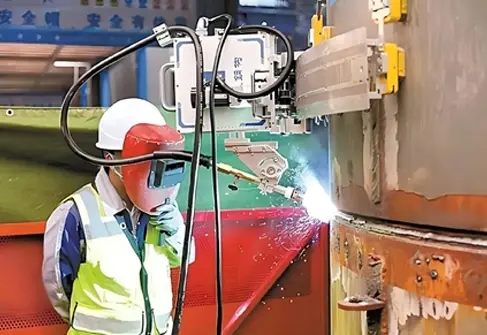
Arc welding involves electric shock, ultraviolet and infrared radiation, hot metal, sparks, fumes and fire hazards. Only trained personnel should install and operate the equipment. Follow the rules that apply at your workplace and location, and review recognized welding-safety guidance before use.
Inspect the equipment:Check the machine case, power lead, electrode holder, work clamp and welding cables for cuts, loose connections, heat damage or exposed conductors.
Use correct PPE : Wear an approved welding helmet, safety glasses, dry welding gloves, protective clothing and suitable footwear.
Control fumes: Provide suitable general or local exhaust ventilation and keep your head out of the welding plume.
Prevent fire: Remove combustible material, protect nearby workers from arc radiation and keep appropriate fire-control equipment available.
Keep the area dry: Do not operate the machine in rain, standing water or conditions that increase electrical-shock risk.
Confirm the input supply: Have a qualified electrician verify voltage, grounding, circuit protection and local-code compliance before connection.
Do not open the machine case: internal components may retain hazardous voltage. Disconnect the input supply before external inspection or cleaning, and refer internal electrical faults to qualified service personnel.
MMA 250 Cable Connections and Polarity
The MMA 250S uses quick connectors for the electrode-holder cable and work-return cable. Polarity must be selected according to the electrode manufacturer's datasheet and the approved welding procedure. There is no single polarity setting that is correct for every stick electrode.
| Polarity | Electrode Holder | Work Clamp | Selection Rule |
|---|
| DCEP / DC+ | Positive (+) | Negative (−) | Use only when specified for the selected electrode and procedure. |
| DCEN / DC− | Negative (−) | Positive (+) | Use only when the electrode datasheet permits DCEN operation. |
How to connect the welding cables
Switch off and isolate the input supply before changing cable connections.
Check the selected electrode's polarity requirement.
Insert each quick connector fully into the correct output socket and turn it until secure.
Fit the electrode into an undamaged electrode holder.
Attach the work clamp directly to clean base metal, as close to the weld area as practical.
Keep welding leads separated from sharp edges, hot surfaces, water and moving equipment.
How to Set Up the MMA 250 Welding Machine
Identify the exact machine: Confirm "MMA 250S," the input-voltage version and the output range on the rating plate.
Position the welder: Place it upright on a stable, dry surface with clear airflow around the vents. Keep grinding dust and metal particles away from the intake.
Verify the electrical supply: Confirm the available voltage matches the machine. Do not improvise adapters or change the supply connection without qualified electrical approval.
Connect holder and clamp: Select DCEP or DCEN only after checking the electrode specification, then tighten both quick connectors securely.
Prepare the workpiece: Remove oil, moisture, heavy rust, paint or coatings from the weld and clamp areas. Assess coating fumes before welding.
Select the electrode: Match the electrode classification and diameter to the base metal, joint, welding position, required properties and available current.
Set a conservative starting current: Start within the electrode manufacturer's recommended range and below the machine's maximum output. Fine-tune according to arc behavior and the qualified procedure.
Make a controlled test weld: Test on representative scrap when possible. Check arc stability, penetration, bead shape and slag behavior before welding the finished component.
Setup principle: the electrode package or datasheet determines the permitted polarity and current window. The machine's output rating determines whether that window is available. Both conditions must be satisfied.
Electrode and Current Selection for the MMA 250S
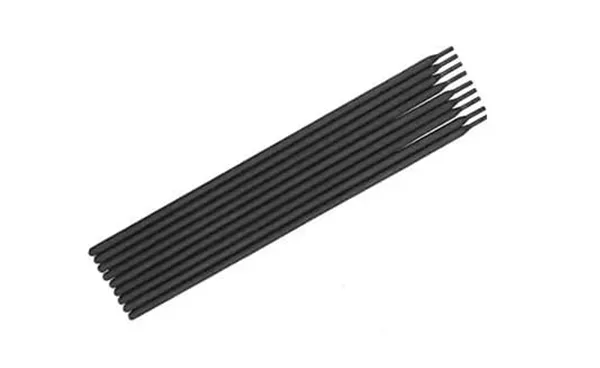
The MMA 250S can run common electrodes such as E6013, E7016 and E7018 when their required current is within the machine's 130A or 150A maximum output. Electrode diameter alone does not determine compatibility; coating type, welding position, polarity, base metal and the specific product datasheet also matter.
| Electrode | Typical Application | What to Confirm Before Use | Related Minghua Page |
|---|
| E6013 | General carbon-steel fabrication, maintenance and light structural work | Permitted current, polarity, diameter, welding position and base-metal suitability | E6013 welding electrode |
| E7016 | Low-hydrogen welding for structural steel and selected repair applications | Storage condition, polarity, current range and the applicable welding procedure | E7016 welding electrode |
| E7018 | Low-hydrogen structural fabrication and selected load-bearing applications | Moisture control, polarity, diameter, current and project-code requirements | E7018 welding rod |
Practical diameter guidance
Smaller-diameter electrodes generally require less current and are easier to match to this compact welder. A 3.2mm electrode will often fall within the MMA 250S output capability, but the exact setting must come from the selected electrode's datasheet. Before attempting a larger diameter such as 4.0mm, verify that its recommended current does not exceed 130A on the 220V machine or 150A on the 380V machine and that the listed duty cycle is suitable for the work.
For a broader overview, see Minghua's welding electrode range. If your application requires higher current or a longer working cycle, compare the ZX7-400, ZX7-500 and ZX7-630 MMA welders instead of assuming the MMA 250S is a 250A machine.
MMA 250 Welding Machine Troubleshooting Guide
Begin with external checks that do not require opening the machine. If a fault persists, if protection operates repeatedly or if there is visible electrical damage, stop using the welder and contact qualified service personnel.
| Symptom | Possible Cause | Safe Checks and Corrective Actions |
|---|
| Machine does not power on | Incorrect input voltage, isolated supply, damaged plug or circuit fault | Stop and verify the nameplate, supply voltage, external switch and visible power-lead condition. Have the circuit checked by a qualified electrician. |
| Power is on but no arc starts | Loose quick connector, poor work-clamp contact, dirty workpiece or damaged cable | Isolate power, tighten the connectors, move the clamp to clean metal and inspect the holder and cables. |
| Electrode repeatedly sticks | Current too low, poor arc-start technique, damp electrode or unstable connection | Check the electrode datasheet, increase current within its permitted range, shorten contact time during striking and use properly stored electrodes. |
| Excessive spatter or harsh arc | Current too high, incorrect polarity, excessive arc length, contaminated material or unsuitable electrode | Confirm polarity, reduce current within the approved range, shorten the arc and clean the base metal. |
| Unstable arc or intermittent output | Loose cable, poor clamp contact, voltage fluctuation, overheated connection or damaged electrode holder | Stop welding and inspect all external connections. Do not continue if a connector or cable becomes unusually hot. |
| Porosity in the weld | Damp electrode, oil, rust, coating contamination, incorrect arc length or inadequate technique | Use electrodes stored according to their instructions, clean the joint and verify the welding procedure. |
| Insufficient penetration | Current too low, travel speed too high, poor joint preparation or unsuitable electrode | Review the approved procedure and electrode data. Adjust only within the machine and electrode limits. |
| Thermal indicator activates or output stops | Duty cycle exceeded, blocked ventilation, high ambient temperature or internal fault | Stop welding, keep the vents clear and allow the machine to cool in a ventilated position. Do not open the case. |
| Supply protection trips | Incorrect supply, inadequate circuit, damaged input lead, short circuit or internal fault | Disconnect the machine. Do not repeatedly reset the protection device; have the installation and welder checked by qualified personnel. |
| Burning smell, smoke, arcing connector or damaged insulation | Serious cable, connection or internal electrical fault | Stop immediately, isolate the input supply and do not reuse the machine until it has been inspected and repaired. |
MMA 250 Duty Cycle and Thermal Protection
The current MMA 250S specification lists a 15% duty cycle. Duty cycle describes the proportion of a standardized test period during which a welder can operate at the stated test conditions before it must cool. It should not be interpreted as permission for continuous welding.
Actual heating is affected by output current, ambient temperature, ventilation, cable condition and welding pattern. Reduce welding time if the work area is hot, dusty or poorly ventilated. Never block the cooling openings or place the machine against a wall, inside a closed cabinet or beside heavy grinding dust.
If thermal protection operates: stop welding and allow the unit to cool in a dry, ventilated position. Do not bypass the protection, continue welding through repeated shutdowns or open the case. Repeated thermal trips under light use require technical inspection.
Cleaning, Inspection and Storage
Before every use
Inspect the power lead, welding cables, electrode holder and work clamp.
Confirm quick connectors are clean, undamaged and fully secured.
Check that ventilation openings are unobstructed.
Confirm the work area is dry and free from uncontrolled combustible material.
After use
Switch off and isolate the input supply before external cleaning.
Allow hot components and the workpiece to cool safely.
Remove loose dust from the outside with a dry, non-conductive cleaning method.
Coil cables without tight bends and store them away from oil, water, heat and sharp edges.
Periodic inspection
Check for looseness, discoloration, cracking or heat damage at cable terminals and connectors.
Replace damaged holders, clamps or cables rather than covering serious defects with temporary tape repairs.
Have internal cleaning, electrical testing and repairs performed by qualified personnel.
Store the welder in a dry, clean and ventilated location when it is not in use.
Frequently Asked Questions About the MMA 250
Q1. Is the Minghua MMA 250S a 250A welding machine?
No. "MMA 250" is the model designation. The current Minghua MMA 250S is listed at 20–130A with 220V input or 20–150A with 380V input. Always check the rating plate because MMA 250 specifications differ between manufacturers.
Q2. Does the MMA 250S use 220V or 380V?
It is available in single-phase 220V ±15% and single-phase 380V ±15% configurations. Use only the input voltage shown on the delivered unit's nameplate, and have the electrical supply verified before connection.
Q3. Which electrodes can the MMA 250 welding machine use?
The MMA 250S can use common stick electrodes such as E6013, E7016 and E7018 when the required current, polarity and diameter are compatible with the machine configuration. Follow the electrode manufacturer's datasheet and the applicable welding procedure.
Q4. What electrode diameter is suitable for the MMA 250S?
The correct diameter depends on electrode classification and required current. A 3.2mm electrode will often operate within the machine's output range, but this must be confirmed against the electrode datasheet. Use a 4.0mm electrode only when its required current is within the 130A or 150A machine limit and the duty cycle is suitable.
Q5. Why does the electrode keep sticking?
Common causes include current that is too low, poor work-clamp contact, damp electrodes, loose connections or arc-start technique. Check the electrode data, connections and base-metal cleanliness before adjusting the current.
Q6. Why does the thermal indicator turn on?
The listed 15% duty cycle may have been exceeded, ventilation may be blocked or the ambient temperature may be high. Stop welding, clear the vents and allow the machine to cool. Repeated thermal trips during light use require technical inspection.
Q7. Why does the circuit protection trip when the welder starts?
The input supply may not match the machine, the circuit may be inadequate, or an external or internal fault may be present. Disconnect the welder and have the supply and machine checked by qualified personnel instead of repeatedly resetting the protection device.
Q8. Can the MMA 250S perform MIG welding?
The current MMA 250S product is positioned as an MMA/SMAW stick welder. Do not assume it supports MIG welding unless the exact delivered model and its documentation explicitly include a MIG process and wire-feed system.
Q9. Can the MMA 250S weld stainless steel?
Selected stainless-steel welding may be possible with an appropriate stick electrode whose current and polarity requirements fit the machine. Confirm the stainless grade, electrode classification, joint requirements and approved procedure before welding.
Need MMA 250S Product Data or a Quotation?When contacting Minghua, provide the required input voltage, destination, intended electrode type, base material, expected workload and order quantity. This helps the team confirm whether the compact MMA 250S or a higher-output ZX7 machine is the better fit. View the MMA 250S Product Contact Minghua |
Technical and Safety References
Technical data basis: current Minghua MMA 250S product specification. Product specifications can change; the rating plate and documentation supplied with the delivered machine take precedence.