WB36 and WB36CN1 steels are used in demanding pressure-bearing and high-pressure piping applications where welding consumable selection must consider more than nominal strength. Weld-metal toughness, hydrogen control, welding procedure qualification, preheat and interpass control, post-weld heat treatment and inspection requirements can all affect the final welding procedure.
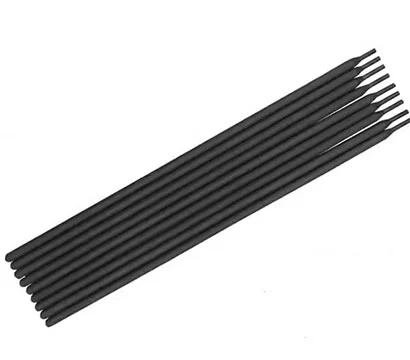
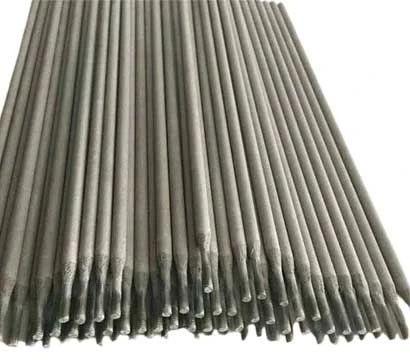
E9018-G welding rod may be specified for selected WB36 welding procedures when its product-specific properties satisfy the requirements of the base material, qualified WPS/PQR and governing project standard. The E9018-G classification alone should not be treated as proof that every electrode carrying the designation is automatically suitable for every WB36 component.
This guide focuses on the engineering checks that should be made when E9018-G is considered for WB36 steel, pressure vessels and high-pressure feedwater pipelines rather than repeating product chemistry, mechanical-property and current tables already provided in the product specification.
Why Is E9018-G Considered for WB36 Steel Welding?
WB36 is a low-alloy high-strength steel used in pressure and power-generation systems. For these applications, filler-metal selection must account for the mechanical performance of the completed weld, the risk of hydrogen-related cracking and the effects of the qualified heat-treatment cycle.
Strength Matching
The selected electrode should provide weld-metal strength appropriate for the WB36 component and project acceptance criteria. Selection should be based on actual qualified mechanical properties rather than classification name alone.
Hydrogen Control
High-strength low-alloy steels can be sensitive to hydrogen-related cracking. Electrode storage, conditioning, exposure time and welding procedure controls therefore need to be managed carefully.
Impact Toughness
Pressure-system projects may specify impact-testing requirements at defined temperatures. Engineers should confirm that the actual electrode and qualified welding procedure satisfy those requirements.
PWHT Compatibility
Where post-weld heat treatment is required, the final weld-metal properties must be evaluated in the relevant heat-treated condition rather than assuming as-welded data will remain unchanged.
Qualified WPS and PQR
The final decision to use E9018-G for WB36 steel should be supported by the applicable welding procedure specification, procedure qualification record and project requirements.
What E9018-G Product Data Must Be Checked Before Welding WB36?
An E9018-G designation does not provide every piece of information required for a WB36 welding procedure. Engineers and procurement teams should review the actual product data for the specific electrode being considered.
What Must Be Checked Before Welding WB36 Steel?
A WB36 welding procedure should be built around the actual component and governing project requirements. The following checks are more useful than selecting an electrode only by its AWS designation.
E9018-G for Pressure Vessel Welding: Key Procedure Controls
Pressure vessel welding requires controlled materials, qualified procedures and traceable inspection. When E9018-G is considered for a WB36 or compatible low-alloy pressure component, the entire welding system should be evaluated rather than focusing only on electrode strength.
| Procedure Control | What Should Be Verified? |
| Material Traceability | Confirm base-material identification, heat or batch records and welding-consumable traceability where required. |
| WPS / PQR | Use a qualified welding procedure covering the material, thickness range, process and heat-treatment condition. |
| Preheat & Interpass | Control according to the qualified procedure and project requirements. |
| Electrode Handling | Maintain appropriate low-hydrogen storage, conditioning and exposure control. |
| PWHT | Confirm the required temperature cycle and ensure qualified weld-metal properties apply to the relevant condition. |
| NDT & Acceptance | Apply the required inspection methods and acceptance criteria defined by the governing project standard. |
For broader application guidance, Minghua also provides information on pressure vessel welding consumables and related welding-consumable selection.
E9018-G for High-Pressure Feedwater Pipeline Welding
WB36 and WB36CN1 may be encountered in high-pressure feedwater and related power-generation piping applications. In this context, welding consumable selection must be coordinated with pipe wall thickness, joint design, heat input, hydrogen control and the qualified procedure.
The electrode should not be selected simply because E9018-G is associated with high-strength low-alloy steel. The specific product data must demonstrate that the weld metal meets the strength, toughness and heat-treatment requirements of the pipeline project.
base-material grade, pipe wall thickness, joint configuration, qualified electrode classification, preheat/interpass requirements, PWHT, low-hydrogen handling and NDT acceptance criteria.
For additional application-level information, see Minghua's pipeline welding consumable selection guidance.
Preheat, Interpass Temperature and PWHT Considerations
Preheat, interpass temperature and PWHT should be treated as procedure variables rather than generic properties of E9018-G welding rod. Their required values depend on factors such as steel grade, thickness, joint restraint, heat input, governing code and the qualified WPS/PQR.
Electrode Handling and Hydrogen Control for WB36 Welding
Hydrogen control is particularly important when welding high-strength low-alloy steels. Moisture absorbed by low-hydrogen electrodes can increase diffusible hydrogen and contribute to cracking risk when other conditions such as high restraint and susceptible microstructures are present.
NDT and Acceptance Requirements for WB36 Welds
Welding is not complete when the final bead is deposited. WB36 pressure-system welds may be subject to inspection and acceptance requirements defined by the governing code, project specification and quality plan.
| Inspection Method | Typical Purpose |
| VT | Visual examination of weld profile, surface condition and workmanship. |
| RT | Radiographic examination where specified for internal weld discontinuities. |
| UT | Ultrasonic examination where required for volumetric weld inspection. |
| MT / PT | Surface or near-surface examination where required by the inspection plan. |
The required NDT method, inspection extent and acceptance criteria should always come from the governing project documentation rather than being assumed from the electrode classification.
WB36 Welding Project Checklist
Before welding consumables are released for a WB36 project, the engineering and purchasing teams should confirm the following information.
| Check | What to Confirm |
| Base Material | WB36, WB36CN1 or exact project material specification |
| Component | Pipe, pressure vessel, boiler component, fitting or repair item |
| Thickness | Actual wall or plate thickness and joint configuration |
| Filler Metal | WPS-approved electrode classification and product-specific data |
| Preheat / Interpass | Qualified WPS/PQR limits |
| PWHT | Applicable code, procedure and heat-treatment condition |
| Hydrogen Control | Storage, conditioning, holding and exposure requirements |
| NDT | Required VT, RT, UT, MT, PT or other inspection methods |
| Acceptance | Applicable code and project acceptance criteria |
| Documentation | Required technical and batch documentation according to the purchase specification |
What Information Should Buyers Provide for a WB36 Welding Project?
A technical welding-consumable inquiry is easier to evaluate when the buyer provides more than an electrode name. For WB36 or pressure-system projects, include the following information where available.
FAQ About E9018-G for WB36 Steel
Why is E9018-G considered for WB36 steel?
E9018-G may be considered when its actual weld-metal strength, toughness, alloy chemistry and low-hydrogen characteristics meet the requirements of the WB36 welding procedure. Final suitability should be confirmed through the qualified WPS/PQR and project specification.
Can E9018-G be used for WB36 pressure vessel welding?
It may be used when E9018-G is qualified for the specific WB36 material, thickness, joint and heat-treatment condition. Pressure vessel applications should follow the governing code, qualified WPS/PQR and project acceptance requirements.
What should be checked before welding WB36 with E9018-G?
Check the exact base-metal grade, thickness, joint design, electrode product data, required mechanical and impact properties, preheat and interpass limits, PWHT, hydrogen-control requirements and NDT acceptance criteria.
Does WB36 welding require PWHT?
PWHT requirements depend on the governing code, component design, material thickness, qualified welding procedure and project specification. It should not be assumed that every WB36 weld uses one universal heat-treatment cycle.
Why is hydrogen control important when welding WB36 steel?
Hydrogen can contribute to delayed cracking when susceptible high-strength steel, sufficient restraint and other unfavorable conditions occur together. Controlled low-hydrogen electrode storage and handling are therefore important parts of the welding procedure.
What NDT methods may be required for WB36 welds?
Depending on the project, welds may be subject to visual examination and methods such as RT, UT, MT or PT. The required method, inspection extent and acceptance criteria should follow the governing code and project inspection plan.
Where can I find Minghua E9018-G product specifications?
Minghua-specific chemical composition, mechanical test values, electrode diameters, polarity and reference welding current are provided on the E9018-G product page linked earlier in this guide.
Planning a WB36 or Pressure-System Welding Project?
When requesting technical or purchasing support, provide the base-material grade, component type, wall or plate thickness, applicable WPS/PWHT requirements, inspection standard, required electrode classification and expected purchasing quantity. This allows the welding consumable to be evaluated against the actual project requirements rather than the product name alone.