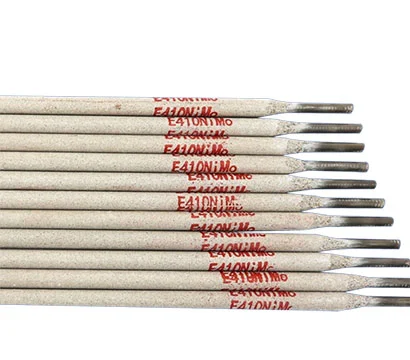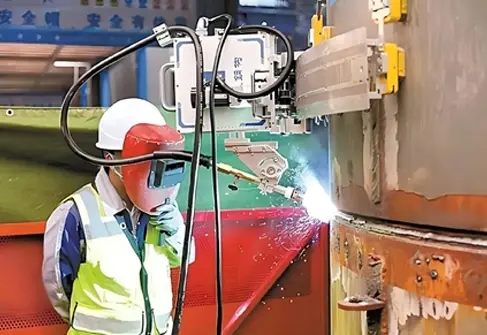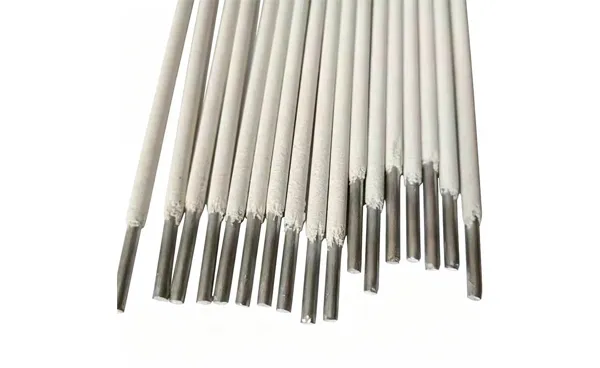
E7016 is a low-hydrogen covered electrode used for shielded metal arc welding of carbon steel and selected low-alloy steel. It is commonly chosen for structural joints, pressure-bearing equipment, shipbuilding, bridges and other applications where weld strength, toughness and hydrogen control are important.
Correct E7016 performance depends on more than selecting the right diameter. Welders must also confirm polarity, amperage, joint preparation, arc length, electrode storage and the applicable welding procedure.
E7016 is an all-position, low-hydrogen SMAW electrode with a minimum deposited-weld-metal tensile strength of 70,000 psi. It is commonly operated with AC or DCEP, but the product label, technical data sheet and approved WPS should always take priority.
What Does E7016 Mean?
The E7016 classification identifies the electrode type, minimum tensile strength, welding position and usability characteristics.
AWS A5.1 covers the classification of carbon steel electrodes for shielded metal arc welding, including chemical composition, mechanical properties, usability and moisture-related requirements. Buyers can review the official AWS A5.1/A5.1M specification overview .
| Specification Item | E7016 Selection Meaning | What Buyers Should Confirm |
|---|---|---|
| Electrode class | Low-hydrogen carbon steel electrode | AWS, ISO or project classification |
| Tensile strength | 70 ksi minimum classification level | Actual batch and TDS results |
| Position | All-position welding | Position limits in the approved WPS |
| Hydrogen control | Low-hydrogen coating system | H4, H8 or other optional designation, if required |
What Is E7016 Welding Rod Used For?
E7016 welding rods are selected for carbon steel and selected low-alloy steel joints where low-hydrogen weld metal and controlled mechanical properties are required. Suitability for a critical component must still be confirmed against the steel grade, design code and welding procedure.
Structural Steel
Beams, columns, frames, bridges and load-bearing carbon steel fabrications.
Shipbuilding
Hull plates, stiffeners and selected marine structural joints.
Pressure Equipment
Selected vessel, tank and pressure-bearing joints under an approved WPS.
Heavy Equipment Repair
Cracked machine frames, booms and stressed carbon steel parts.
Minghua’s E5016/E7016 welding electrode is available in 3.2 mm, 4.0 mm and 5.0 mm diameters for industrial fabrication and welding-consumable supply projects.
For pressure-bearing fabrication, electrode selection should be checked against the applicable material, design code, impact requirement and approved welding procedure. Buyers can also review Minghua’s pressure vessel welding solutions .
E7016 Polarity, Current and Welding Setup
Which Polarity Is Used for E7016?
E7016 is generally designed for AC or direct current electrode positive, also written as DCEP or DC+. Individual brands may have different operating recommendations, so the product label and technical data sheet should be checked before welding.
Do not assume that every electrode marked “7016” uses exactly the same current recommendation. Confirm the manufacturer, classification and package label, especially when changing brands or welding machines.
Recommended E7016 Welding Current
The following current ranges are based on Minghua’s current E5016/E7016 product data. They are starting ranges rather than universal settings.
| Electrode Diameter | Recommended Current | Typical Selection Direction |
|---|---|---|
| 3.2 mm | 80–120 A | Root passes, positional welding and moderate plate thickness |
| 4.0 mm | 130–180 A | General structural fabrication and fill passes |
| 5.0 mm | 170–240 A | Thicker plate and higher-deposition applications |
Actual amperage should be adjusted according to welding position, plate thickness, joint design, arc length and machine output. Vertical and overhead welding normally require more controlled heat input than flat-position welding.
Practical Welding Setup
Remove rust, oil, moisture, paint and scale from the joint.
Confirm whether preheating is required for the steel grade and thickness.
Connect the machine using the polarity specified on the electrode package.
Start near the lower end of the recommended current range.
Maintain a short, controlled arc to reduce porosity and unstable transfer.
Remove slag completely before depositing the next pass.
Control interpass temperature according to the WPS.
A stable inverter power source can make low-hydrogen electrodes easier to control. For workshop applications, review Minghua’s MMA 250 inverter welding machine .
How to Store and Re-Dry E7016 Electrodes
Low-hydrogen electrodes must be protected from moisture. Moisture absorbed by the coating can affect arc behavior and increase the risk of porosity, hydrogen-related cracking and other weld defects.
General industry references often show re-drying temperatures around 300–400°C for low-hydrogen electrodes, followed by heated storage. However, the correct temperature and time vary by brand, coating and package condition. Always follow the manufacturer’s current instructions instead of applying a generic baking cycle.
ESAB provides further guidance on storing and re-drying stick electrodes .
Excessive temperature or repeated uncontrolled baking may damage the coating. When the exposure history is unknown, consult the electrode supplier and the project welding specification.
E7016 vs E7018 and Buyer Selection Checklist
E7016 and E7018 are both low-hydrogen structural electrodes, but their coating formulations and operating characteristics differ. E7018 contains iron powder and is commonly selected when deposition efficiency and smooth bead appearance are priorities. E7016 is often considered where controlled arc behavior and positional or root-pass handling are important.
| Comparison | E7016 | E7018 |
|---|---|---|
| Coating | Low-hydrogen potassium | Low-hydrogen potassium with iron powder |
| Typical strength class | 70 ksi | 70 ksi |
| Deposition direction | Controlled positional and root-pass work | Higher deposition and general structural welding |
| Final choice | Base metal, WPS, current type, mechanical requirements and project specification | |
Read the full E7016 vs E7018 welding electrode comparison before selecting between the two classifications.
Information Required for an E7016 Quotation
Applicable AWS, ISO or project classification
Required electrode diameter and length
Base metal and joint type
Mechanical and impact requirements
Hydrogen designation, if specified
Packaging and order quantity
Required TDS, COA or inspection documents
Destination country and delivery requirements
Conclusion
E7016 is an all-position low-hydrogen electrode for carbon steel and selected low-alloy steel fabrication. Reliable results depend on correct polarity, suitable amperage, short arc control, dry electrode handling and compliance with the approved WPS. Before bulk purchasing, confirm the classification, diameter, mechanical properties, packaging and storage instructions with the supplier.
Frequently Asked Questions
What is E7016 welding rod used for?
E7016 is used for structural carbon steel and selected low-alloy steel welding, including bridges, buildings, ship structures, pressure equipment and heavy machinery repairs.
Is E7016 a low-hydrogen electrode?
Yes. E7016 uses a low-hydrogen coating system and should be kept dry to limit moisture pickup and hydrogen-related weld problems.
What polarity should be used for E7016?
E7016 is commonly operated with AC or DCEP. Confirm the exact polarity on the manufacturer’s label and technical data sheet.
What current is used for a 3.2 mm E7016 rod?
Minghua’s current product data recommends a starting range of 80–120 A for a 3.2 mm electrode. Adjust the setting according to position, joint design and plate thickness.
Can E7016 be used in all welding positions?
The “1” in E7016 indicates all-position capability. The actual technique and permitted position must still comply with the qualified welding procedure.
How should E7016 electrodes be stored?
Keep unopened packages dry and sealed. After opening, use suitable heated storage when required and follow the manufacturer’s instructions for exposure limits and re-drying.
What is the difference between E7016 and E7018?
Both are low-hydrogen electrodes, but E7018 contains iron powder and is commonly selected for higher deposition efficiency. E7016 may be preferred for specific positional and root-pass requirements.
Need E7016 Specifications or a Bulk Quote?
Send Minghua your required classification, diameter, quantity, application and destination country.
Request E7016 Price & Technical Data