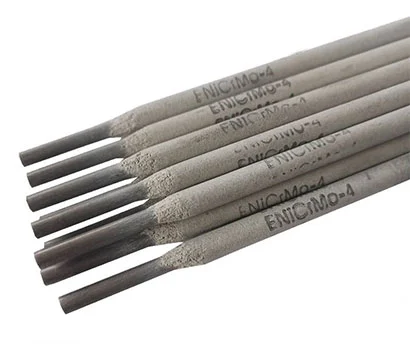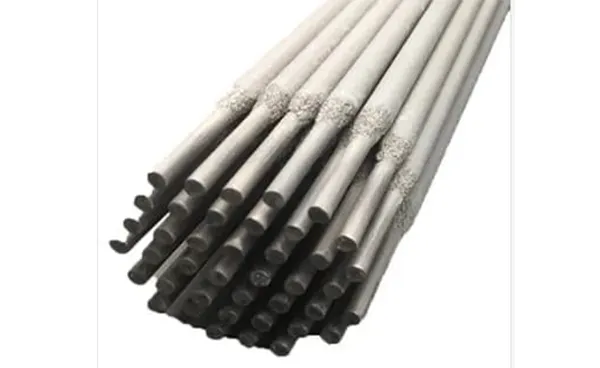
E8018-C3 is a low-hydrogen, low-alloy steel welding electrode designed to produce an approximately 1% nickel weld deposit. It is used for shielded metal arc welding of selected high-strength and low-temperature steels where strength, impact toughness and hydrogen control are important.
Typical applications include pressure vessels, marine structures, storage tanks, piping and other welded components exposed to cold service conditions. Final electrode selection must be based on the base-metal grade, required impact temperature, welding position and approved welding procedure specification.
E8018-C3 is an 80 ksi class, all-position, low-hydrogen iron-powder electrode containing approximately 1% nickel. It is commonly used with AC or DCEP for low-alloy steel applications requiring reliable notch toughness at low temperatures.
What Does E8018-C3 Mean?
The E8018-C3 designation identifies the electrode form, strength class, welding-position capability, coating type and alloy composition.
The C3 suffix distinguishes this electrode from general carbon-steel E8018 electrodes and from other low-alloy classifications such as C1, B2 or G. AWS E8018-C3 requirements typically include approximately 0.80–1.10% nickel in the deposited weld metal.
The nickel addition supports weld-metal toughness at low temperatures. However, nickel content alone does not determine suitability. The completed weld must also satisfy the project requirements for tensile strength, yield strength, elongation, impact energy and diffusible hydrogen.
E8018-C3 Welding Rod Specification
Minghua’s current E8018-C3 low-temperature welding rod page provides example chemical composition and mechanical-property data for the deposited metal.
| Specification Item | Minghua Example Value | Selection Significance |
|---|---|---|
| Carbon | 0.06% | Affects strength, hardness and crack sensitivity |
| Manganese | 1.17% | Supports strength and weld-metal deoxidation |
| Nickel | 0.95% | Supports low-temperature impact toughness |
| Tensile Strength | 590 MPa | Must match the base metal and design requirement |
| Yield Strength | 500 MPa | Important for structural load performance |
| Elongation | 28% | Indicates deposited-metal ductility |
| Impact Energy | 135 J at -40°C | Relevant to low-temperature toughness |
| Diffusible Hydrogen | ≤5.0 mL/100 g | Requires controlled storage and handling |
These are example deposited-metal values, not guaranteed results for every weld. Actual performance varies with the welding procedure, base-metal chemistry, heat input, preheat, interpass temperature and test condition. Request the current TDS and batch certificate before approving the electrode.
E8018-C3 Uses and Low-Temperature Applications
E8018-C3 is primarily selected for low-alloy steels that require an 80 ksi strength class and dependable toughness in cold operating environments. The electrode is not automatically suitable for every cryogenic or pressure-bearing application; the required service temperature and impact values must be verified.
Pressure Vessels
Low-alloy vessel shells, tanks and pressure-bearing components requiring controlled low-temperature toughness.
Marine Engineering
Ship structures, offshore components and marine equipment exposed to cold service conditions.
Storage Tanks
Selected gas, fuel and industrial storage systems manufactured from compatible low-alloy steels.
Piping and Repair
Selected low-alloy piping, cross-country pipe repairs and cold-environment structural maintenance.
For pressure-bearing projects, review Minghua’s pressure vessel welding solutions and confirm the electrode against the vessel material, design code, PWHT condition and approved WPS.
Why Is Impact Toughness Important at Low Temperatures?
Steel and deposited weld metal can become less tolerant of defects as service temperature decreases. A weld may have sufficient tensile strength but still fail to meet the required Charpy impact value at the project test temperature.
For this reason, low-temperature electrode selection should verify:
The minimum design-metal temperature
The required Charpy test temperature and impact energy
Base-metal strength and alloy composition
As-welded or post-weld heat-treated condition
Maximum permitted diffusible hydrogen
Project code and inspection requirements
E8018-C3 Polarity, Current and Welding Technique
What Polarity Is Used for E8018-C3?
E8018-C3 electrodes are commonly operated with alternating current or direct current electrode positive. DCEP is also called DC+ or reverse polarity. The manufacturer’s product label and technical data sheet should take priority because operating recommendations can vary between formulations.
Use a short arc, start near the lower-middle part of the recommended amperage range and increase current only when fusion and bead shape require it. Excessive arc length can increase spatter, porosity and loss of shielding.
Typical E8018-C3 Current Ranges
The table below shows typical starting ranges published for a comparable AWS E8018-C3 electrode. These values should not replace Minghua’s current product data or the approved WPS.
| Electrode Diameter | DC Reference Current | AC Reference Current | Typical Direction |
|---|---|---|---|
| 2.4 mm | 70–110 A | 80–120 A | Root passes and positional welding |
| 3.2 mm | 90–160 A | 100–160 A | General positional and structural welding |
| 4.0 mm | 130–210 A | 140–210 A | Fill and cap passes on thicker material |
| 4.8 mm | 180–300 A | 200–300 A | Flat and horizontal high-deposition work |
Available diameters and actual Minghua current ranges should be confirmed before ordering. Vertical-up and overhead welding generally require more controlled amperage and a smaller electrode than flat-position welding. Vertical-down welding should not be used unless the electrode TDS and project WPS specifically permit it.
Welding Technique Checklist
Remove oil, moisture, rust, paint and scale from the joint.
Confirm the base-metal grade and required preheat temperature.
Use AC or DCEP as specified by the electrode manufacturer.
Maintain a short arc and a controlled electrode angle.
Use stringer beads or limited weaving according to the WPS.
Remove slag completely between passes.
Monitor heat input and interpass temperature.
Apply PWHT only when required by the material and project procedure.
Storage, Re-Drying and E8018-C3 Selection
E8018-C3 is a low-hydrogen electrode, so moisture control is essential. Moisture absorbed by the coating can increase diffusible hydrogen and the risk of delayed cracking, particularly in higher-strength and highly restrained weldments.
General manufacturer guidance for E8018-class low-hydrogen electrodes may use heated storage around 120–150°C after opening and higher temperatures for controlled re-drying. These temperatures are not universal. Follow the product label and Minghua technical data sheet instead of applying a generic oven cycle.
For additional handling guidance, review Lincoln Electric’s low-hydrogen electrode storage and re-drying guide .
Electrodes with cracked, flaking, wet or visibly damaged coatings should not be used for critical low-temperature welding. Re-drying cannot reliably restore electrodes that have suffered serious water contamination or coating damage.
E7018 vs E8018-C3 vs E9018-G
| Electrode | Strength Class | Alloy Direction | Typical Selection |
|---|---|---|---|
| E7018 | 70 ksi | General carbon and low-alloy steel | General structural low-hydrogen welding |
| E8018-C3 | 80 ksi | Approximately 1% nickel | Low-temperature 80 ksi low-alloy applications |
| E9018-G | 90 ksi | Manufacturer-defined low-alloy requirements | Higher-strength and specialized low-temperature applications |
Do not substitute one classification for another based only on tensile strength. The correct choice depends on the base-metal specification, alloy matching, impact-test temperature, PWHT condition and project approval.
Information Required for an E8018-C3 Quotation
Required AWS, ASME, ISO or project classification
Base-metal grade and plate thickness
Minimum service and impact-test temperature
Required tensile, yield and impact properties
Hydrogen designation such as H4 or H4R, if specified
Electrode diameter, length and order quantity
As-welded or post-weld heat-treated requirements
Required TDS, COA and inspection certificates
Destination country and packaging requirements
Conclusion
E8018-C3 is an 80 ksi, approximately 1% nickel, low-hydrogen electrode used for selected low-alloy steels requiring dependable low-temperature toughness. Successful use depends on matching the electrode to the base metal, impact requirement, polarity, current range, storage procedure and approved WPS. Always verify the current Minghua TDS and batch test certificate before production welding.
Frequently Asked Questions
What is E8018-C3 welding rod used for?
E8018-C3 is used for selected low-alloy steel structures requiring 80 ksi strength and low-temperature toughness, including pressure vessels, marine structures, tanks and piping.
What does C3 mean in E8018-C3?
C3 identifies a low-alloy deposited-metal chemistry containing approximately 1% nickel, commonly around 0.80–1.10% Ni under AWS requirements.
What polarity is used for E8018-C3?
E8018-C3 is commonly used with AC or DCEP. The manufacturer’s label and approved welding procedure should confirm the required polarity.
What current is used for a 3.2 mm E8018-C3 rod?
A typical starting range is approximately 90–160 A on DC or 100–160 A on AC. Final amperage must be adjusted according to the product TDS, welding position and joint design.
Is E8018-C3 suitable for all welding positions?
The “1” indicates all-position capability, although vertical-down welding is normally excluded unless specifically approved by the product data sheet and WPS.
Is E8018-C3 suitable for -40°C service?
E8018-C3 products are commonly tested for impact toughness at -40°C, but suitability depends on the required impact energy, actual batch results and project design temperature.
How should E8018-C3 electrodes be stored?
Keep unopened packages sealed and dry. After opening, use a suitable heated holding cabinet and follow the manufacturer’s specified exposure and re-drying instructions.
What is the difference between E7018 and E8018-C3?
E7018 is a 70 ksi general low-hydrogen electrode. E8018-C3 is an 80 ksi low-alloy electrode with approximately 1% nickel for selected low-temperature applications.
Need E8018-C3 Technical Data or a Bulk Quote?
Send Minghua your base-metal grade, required impact temperature, electrode diameter, quantity and destination country.
Request E8018-C3 Price & Technical Data