Main Technical Features
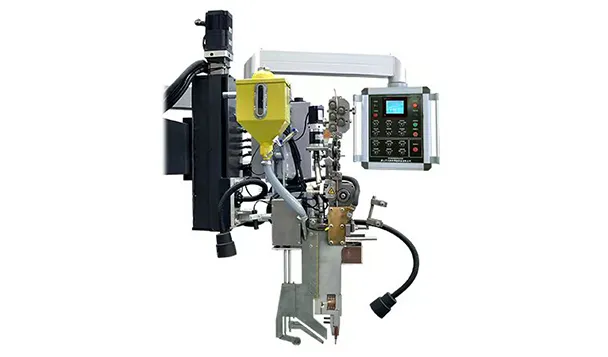
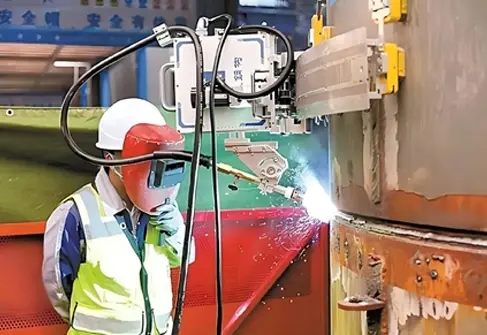
Equipped with dual side-wall tracking and height tracking functions. It keeps constant wire-to-sidewall distance and constant wire stick-out, minimizing welding defects caused by assembly deviation and ensuring stable welding quality.
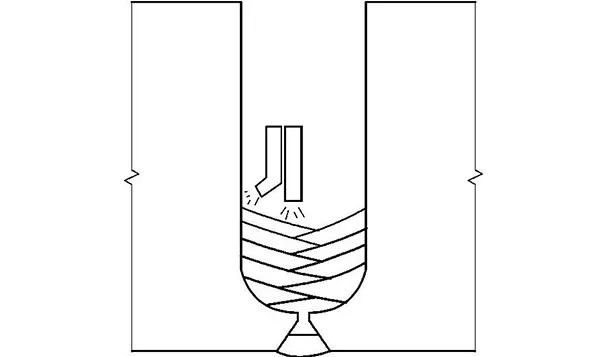
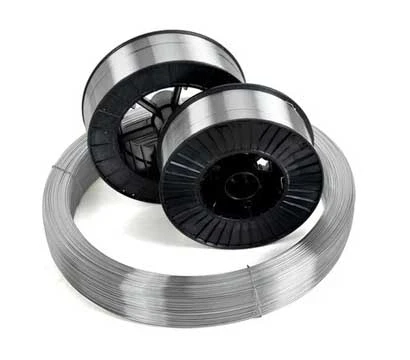
Adopt twin-wire welding process: straight wire feeds vertically downward while bent wire points toward groove side wall. Both wires work within one common molten pool to produce wide-and-thin weld beads. Subsequent weld bead delivers heat-treatment tempering effect on previous passes. Heat input to groove side walls is reduced. Mechanical properties of welded joints, especially toughness of heat-affected zone (HAZ), are better than conventional submerged-arc welding.
Fully-automatic one-layer-two-pass welding cycle. Achieves excellent weld profile and smooth weld surface. Welding slag shell peels off automatically, no manual slag removal required inside narrow groove, greatly saving post-processing labor cost.
Narrow-groove design reduces filler metal consumption by 50-60% vs conventional SAW. Lower welding distortion and residual stress, less straight-overhead work, ideal for mass production of heavy thick-wall vessels.
Typical Workpieces
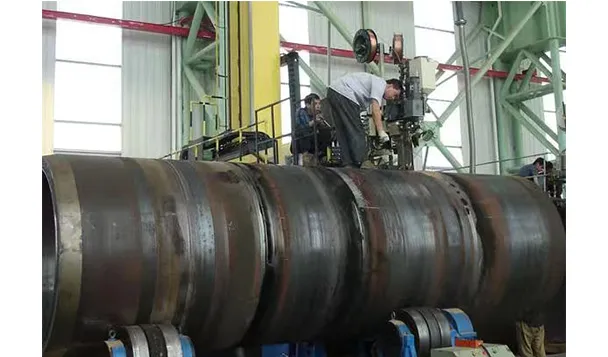
Outer circumferential & longitudinal seams of heavy-duty pressure vessels, hydrogenation reactors, boiler drums, nuclear-power component shells.
Specifications
| Item | Parameter |
| Max Groove Depth | 300–400 mm |
| Groove Root Width | 18–24 mm |
| Welding Process | Twin-wire narrow gap SAW, one-layer-two-pass |
| Tracking | Dual side-wall + height tracking |
| Slag Removal | Automatic slag peeling, no manual cleaning |
Application
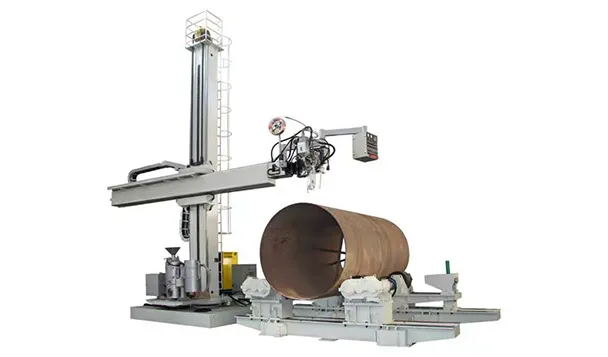
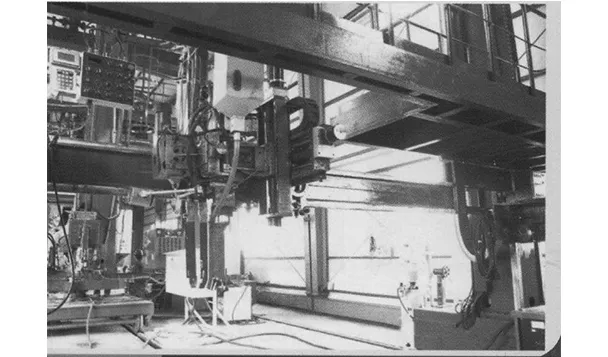
Specially designed for automatic welding of main circumferential seams on heavy-duty pressure vessel shells. It handles groove depth up to 300-400 mm with groove root width of 18-24 mm. Widely used in petrochemical, boiler and nuclear-power thick-wall pressure-vessel fabrication.