2025-12-05
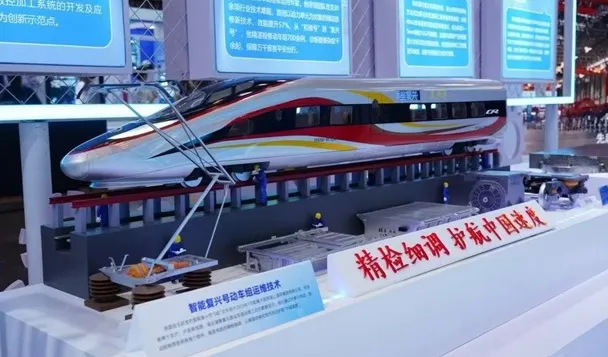
In 2025, the welding industry is undergoing a profound transformation from exquisite craftsmanship to intelligent manufacturing. The spirit of Great Power Craftsmen converges and integrate...
Read More

Pressure vessel filler-metal selection should begin with the vessel material, service environment and qualified welding procedure—not with a familiar electrode number. Carbon steel, low-alloy steel, stainless steel and nickel-alloy vessels may require very different approaches to hydrogen control, impact toughness, corrosion resistance and post-weld heat treatment.
A welding consumable that performs well on a general fabrication job is not automatically suitable for a pressure-bearing component. Pressure vessel welds may need to satisfy requirements for tensile and yield strength, Charpy impact toughness, corrosion resistance, elevated- or low-temperature service, PWHT and traceability at the same time.
Minghua's Pressure Vessel Welding Solution covers the broader fabrication processes and equipment used for vessel production. This article focuses on a narrower question: how should engineers and procurement teams select the welding consumable itself?
For an overview of available electrode, solid-wire and flux-cored-wire families, you can also review Minghua's industrial welding consumables range.

Pressure vessel fabrication requires welding processes and consumables to be evaluated as one qualified system.
One of the most common purchasing mistakes is beginning with a consumable name—“E7018,” “E8018-C3,” “E9018-G,” or “ERNiCrMo-3”—before confirming what the pressure vessel actually requires.
The more reliable approach is to work backward from the design and service conditions. Before selecting a filler metal, establish the following five facts.
Pressure-vessel manufacturers working to ASME requirements should verify the applicable edition and project scope. ASME's 2025 Boiler and Pressure Vessel Code includes Section IX for welding qualifications and Section II materials requirements.
ASME BPVC Section II, Part C specifically addresses specifications for welding rods, electrodes and filler metals.
Pressure vessel fabrication covers a much wider material range than ordinary structural welding. The four material families below illustrate why one universal “pressure vessel electrode” does not exist.
Carbon-steel pressure vessels frequently use low-hydrogen SMAW electrodes when the qualified procedure requires controlled hydrogen and defined mechanical properties.
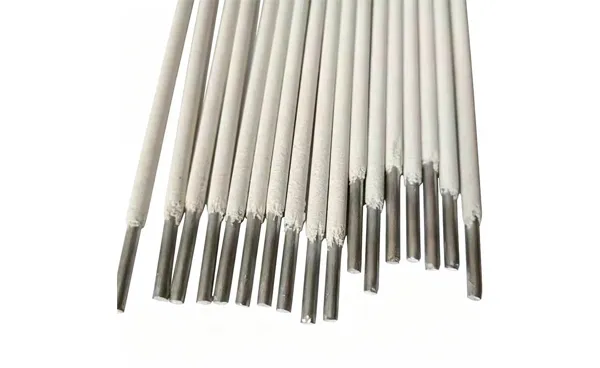
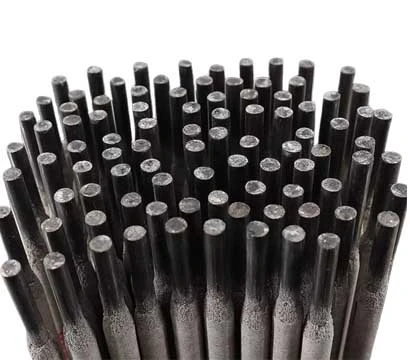
Products such as E7018 welding rod or E7016 welding electrode may be considered for compatible carbon- and low-alloy-steel pressure components where their classification, impact properties and WPS match the vessel requirements.
Procurement teams should therefore check the complete TDS rather than treating “70 ksi low hydrogen” as a sufficient approval criterion.
Low-alloy and low-temperature vessels introduce additional variables: alloy matching, impact toughness, hydrogen cracking resistance, preheat, interpass control and the effect of PWHT on deposited-metal properties.
Minghua's E8018-C3 low-temperature welding rod is one example of an approximately 1% Ni low-alloy electrode intended for selected low-temperature and pressure-vessel applications.
For selected WB36 or WB36CN1 pressure-bearing components, an E9018-G welding rod may be evaluated when its actual deposited-metal chemistry, strength, toughness and heat-treatment condition match the qualified procedure.
Stainless pressure vessels used in chemical, food, pharmaceutical and process applications are selected for corrosion resistance as much as strength. Filler-metal selection must therefore consider the actual stainless grade, process medium, operating temperature and whether the joint is similar or dissimilar.
For example, ER316L stainless steel solid wire may be suitable for corresponding 316L-type applications where molybdenum-bearing filler metal is required by the approved procedure.
Minghua also supplies stainless steel solid welding wires including ER308L, ER309L, ER316L, ER321, ER2209 and ER2594 families for different alloy systems.
In high-temperature, cryogenic, chemical-processing or highly corrosive vessel service, nickel-base filler metals may be selected because corrosion resistance and temperature performance become as important as nominal weld strength.
Minghua's ENiCrFe-3 nickel welding rod is intended for selected high-nickel, nickel-base and dissimilar-metal applications, while ENiCrMo-4 is positioned for C-276 and other Ni-Cr-Mo corrosion-resistant alloy systems.
Browse the broader nickel welding rod range when the project involves nickel alloys, dissimilar-metal joints or severe corrosion environments.
| Vessel Material | Consumable Direction | Main Engineering Checks | Minghua Examples |
| Carbon Steel | Low-hydrogen SMAW, suitable FCAW/GMAW or SAW combinations | Strength, hydrogen control, toughness, position, WPS | E7016, E7018 |
| Low-Alloy / Low-Temperature Steel | Low-alloy low-hydrogen consumables matched to procedure | Alloy chemistry, impact toughness, preheat, PWHT | E8018-C3, E9018-G |
| Austenitic Stainless Steel | Matching or over-alloyed stainless filler where procedure requires | Base grade, corrosion medium, temperature, joint type | ER308L, ER316L, ER321 |
| Duplex / High-Alloy Stainless | Alloy-specific stainless filler | Phase balance, corrosion resistance, heat input | ER2209, ER2594 |
| Nickel / Ni-Cr-Mo Alloy | Nickel-base alloy filler matched to alloy and service | Corrosion, temperature, dilution, dissimilar-metal compatibility | ENiCrFe-3, ENiCrMo-3, ENiCrMo-4, ENiCrMo-6 |
Pressure vessels are rarely fabricated with only one welding process. A shop may use GTAW for a root, SMAW for selected manual joints, FCAW or GMAW for productive fill passes, and SAW for long longitudinal or circumferential seams. The metallurgy may remain similar, but the consumable form and operating requirements change.
| Process | Consumable Form | Typical Pressure Vessel Role | What Must Be Confirmed |
| SMAW | Covered electrode | Manual welding, repairs, restricted-access joints | Classification, polarity, hydrogen, position, storage |
| GTAW / TIG | Solid filler rod or wire | Root passes, stainless and alloy joints, precision work | Filler grade, purity, shielding gas, joint cleanliness |
| GMAW / MIG-MAG | Solid wire | Higher-productivity shop welding | Wire grade, gas, transfer mode, heat input |
| FCAW | Flux-cored wire | High-deposition fabrication and positional welding | Classification, shielding gas, toughness, diffusible hydrogen |
| SAW | Wire + flux combination | Long seams and high-deposition automated welding | Wire-flux combination, current, polarity, toughness, heat input |

Pressure vessel consumables must be selected together with the welding process, material and service conditions.
Pressure-vessel projects frequently impose post-weld heat treatment to control residual stress or achieve specified metallurgical conditions. The mistake is assuming that an electrode's published as-welded mechanical properties will remain unchanged after heat treatment.
A low-alloy weld deposit can respond to PWHT differently from a carbon-steel or nickel-alloy deposit. Strength may decrease, toughness may change, and alloy-specific tempering reactions can affect final acceptance.
This point is particularly important when evaluating E9018-G for WB36 pressure systems, where the welding procedure must account for base-metal grade, preheat, interpass control, PWHT and inspection requirements.
A low-hydrogen consumable can lose much of its practical value if storage, rebaking, holding and shop-floor exposure are poorly controlled. Pressure-bearing and higher-strength steels are especially sensitive because hydrogen-assisted cracking may occur after the weld appears visually acceptable.
This means purchasing should verify more than the classification on the box. Packaging condition, batch traceability, manufacturer's storage instructions and the site's electrode-handling procedure all matter.
For chemical-processing vessels, corrosion resistance can become the dominant selection criterion. Two stainless steels may look similar from a general fabrication perspective but behave differently in chloride, acid or elevated-temperature environments.
For example, ER316L includes molybdenum and may be selected for compatible 316-series stainless applications requiring improved resistance to selected corrosive environments, while nickel-chromium-molybdenum fillers may be required for more severe alloy systems.
In dissimilar joints, the filler metal also has to tolerate dilution from both sides of the joint. That is why a nickel-alloy filler may sometimes be chosen for a stainless-to-low-alloy or high-nickel-to-steel transition joint—but only where the WPS and metallurgical requirements support that approach.
A pressure-vessel consumable RFQ is much easier to evaluate when it contains engineering information rather than only a product name and quantity.
Low hydrogen is valuable, but the electrode still has to meet the required strength, toughness, base-metal and heat-treatment conditions.
The filler metal may still be correct, but that conclusion should come from qualified post-PWHT data—not assumption.
Pressure vessels may fail the project requirement because of inadequate impact toughness, corrosion resistance or service-temperature performance even when tensile strength is acceptable.
There is no single universal pressure-vessel electrode. Selection depends on base-metal grade, required mechanical properties, service temperature, hydrogen requirements, PWHT and the qualified WPS. E7016, E7018, E8018-C3 and E9018-G are examples that may be considered in different steel systems.
E7018 may be suitable for compatible carbon- and low-alloy-steel pressure-vessel procedures where the required strength, toughness, hydrogen control and code requirements are satisfied. The classification alone does not approve it for every vessel.
E8018-C3 may be considered for selected low-alloy and low-temperature steel applications when its strength, approximately 1% nickel weld deposit, impact properties and WPS match the pressure-vessel material and service requirements.
E9018-G may be specified for selected high-strength low-alloy steel applications, including some WB36 or WB36CN1 procedures, when the specific electrode chemistry, strength, toughness and PWHT condition satisfy the qualified WPS.
The filler metal should be matched to the stainless base grade and service environment. ER308L, ER316L, ER321, ER2209 and ER2594 are examples for different stainless alloy systems, subject to the WPS and corrosion requirements.
Nickel-alloy fillers may be selected where corrosion resistance, high-temperature strength, cryogenic toughness or dissimilar-metal compatibility is required. The specific nickel classification must match the alloy system and qualified procedure.
Yes. PWHT can change weld-metal strength and toughness. Consumable data should be checked in the heat-treatment condition required by the actual pressure-vessel procedure.
Review the project material specification, WPS/PQR, applicable construction code, consumable classification, manufacturer TDS, required mechanical-property data, PWHT condition and batch or traceability documentation where required.
Review the complete Pressure Vessel Welding Solution.
Compare Welding Electrodes for carbon steel, low-alloy steel and nickel-alloy applications.
Explore Solid Welding Wire for TIG, MIG/MAG and selected SAW processes.
For WB36 and related pressure-system applications, see E9018-G Welding Rod for WB36 Steel and Pressure Systems .
Send Minghua the base-metal grade, vessel application, plate or wall thickness, welding process, required filler-metal classification, mechanical-property requirements, service temperature, PWHT condition, documentation requirements and purchasing quantity. This information allows the consumable to be evaluated against the actual project rather than only a product name.
Discuss Your Pressure Vessel ProjectNEXT